
Last updated November 15, 2026
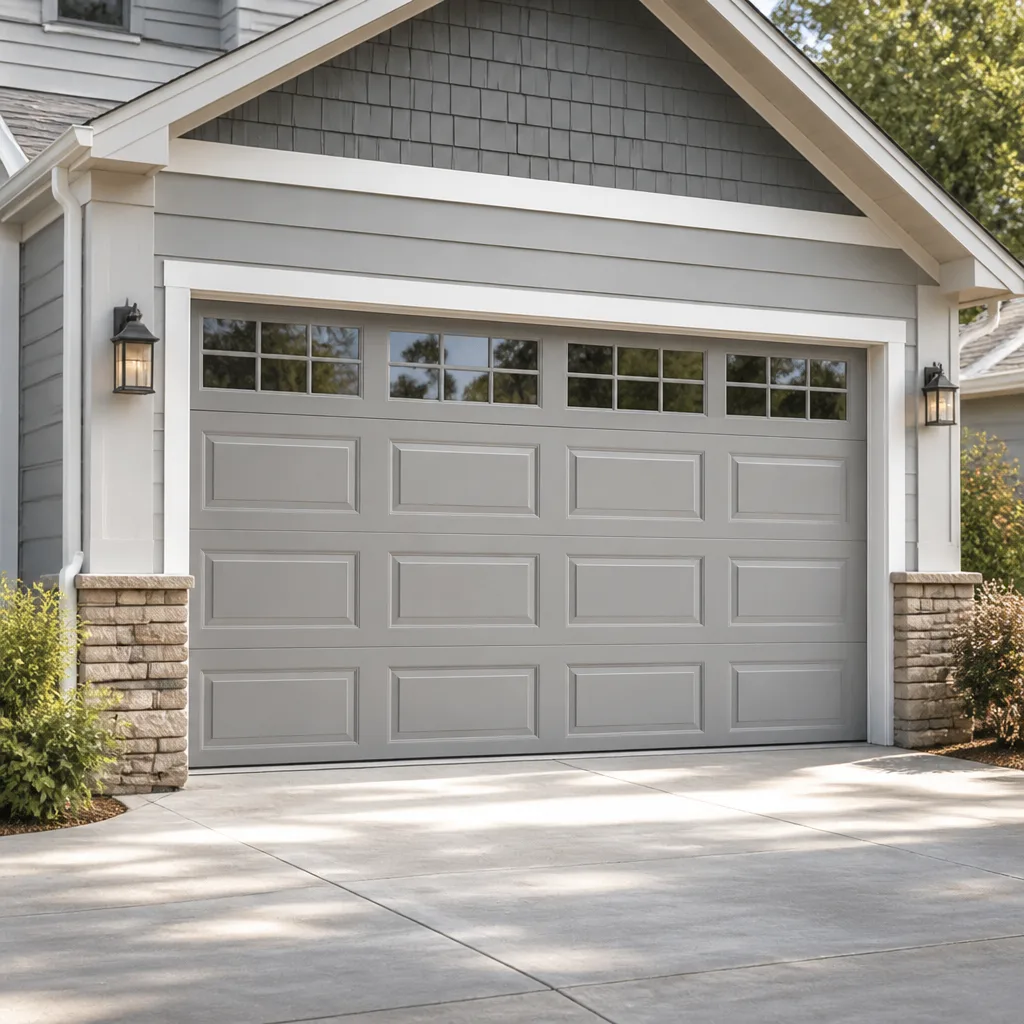 Raised-panel steel
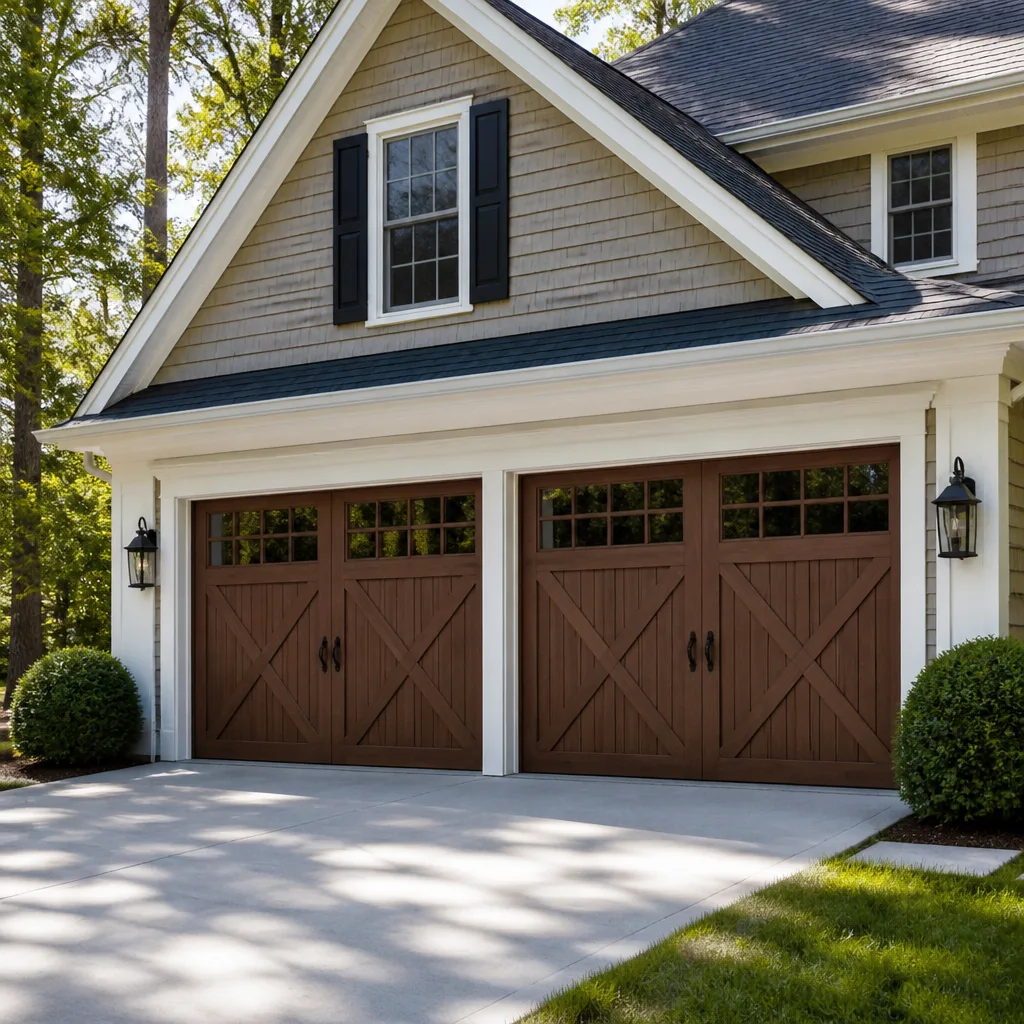 Carriage house
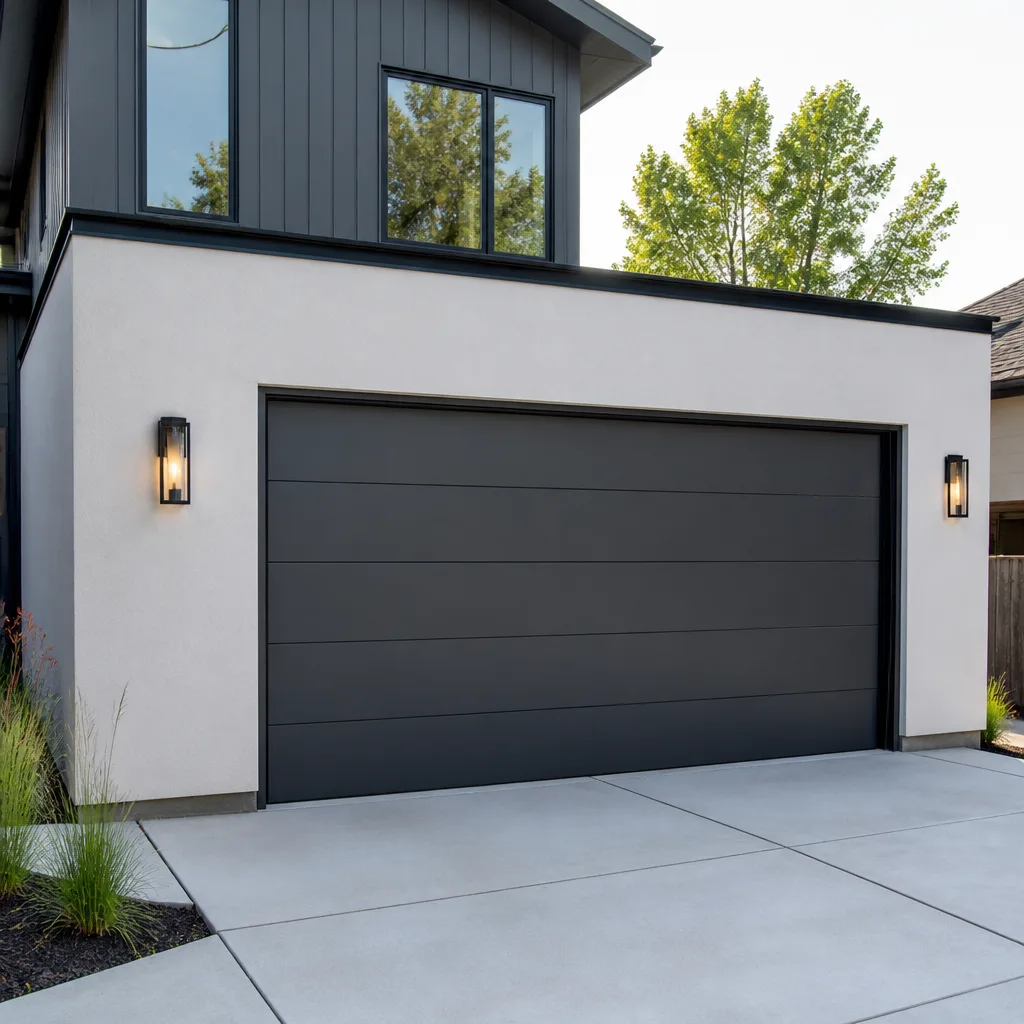 Modern flush
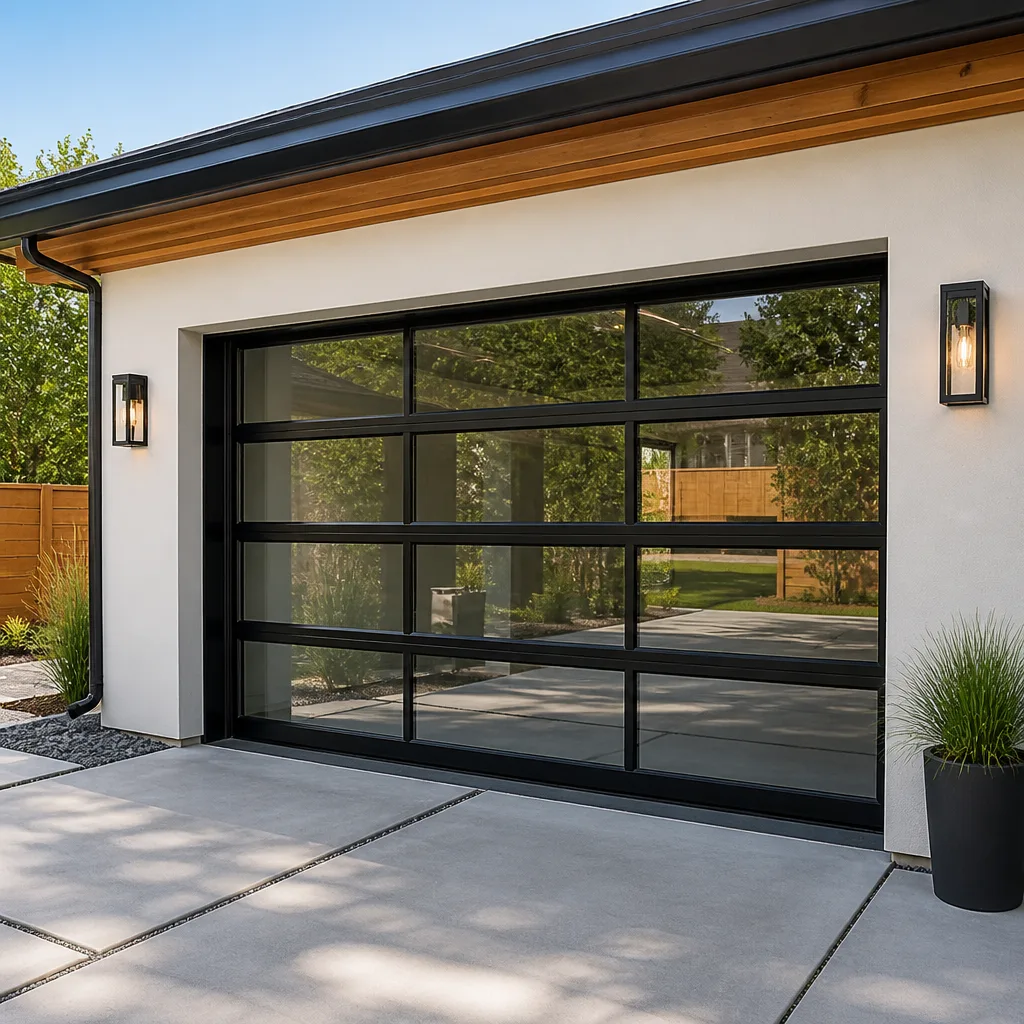 Full-view glass
 LiftMaster openers
 Chamberlain openers
Full 25-point door and opener safety check with every visit - springs, cables, rollers, tracks, and your LiftMaster or Chamberlain opener included
You get a price before we start. It does not change when the pro arrives.
Get your free estimateGarage Door Permits, Codes & Inspections in High Point, NC: What You Need to Know
Most homeowners in High Point assume that any garage door project is a no-permit job, and for a simple like-for-like swap they’re usually right. The trouble starts quietly. Add a new opener circuit to a detached garage, change the rough opening size by a few inches, or enclose a carport to create a garage, and the work crosses into permit territory under the North Carolina Residential Building Code. That distinction is free to get right before installation and expensive to untangle when you’re selling the house. This guide explains when a permit is required for garage door work in High Point, what inspectors actually look at, and the right sequence for pulling permits and getting a final sign-off before the door ever goes up.
Quick Answer
A straight like-for-like garage door replacement in High Point generally does not require a building permit, but any structural change, any change to the rough opening size, and any new or modified electrical circuit for a garage door opener usually does. When a permit is required, it’s issued by the City of High Point and inspected before the job is signed off. Getting the permit pulled and inspected in the right order protects you at resale, when a buyer’s inspector goes through the file.
Styles & brands we work with
- Raised-panel steel
- Carriage house
- Modern flush
- Full-view glass
- LiftMaster openers
- Chamberlain openers
Table of Contents
- When does a garage door project need a permit in High Point?
- What “like-for-like replacement” actually means
- Electrical permits, opener circuits, and GFCI rules
- Structural changes and rough-opening alterations
- Which code rules apply in High Point
- The correct sequence for permits, inspection, and installation
- What a home inspector sees in an unpermitted job
- Common mistakes to avoid
When Does a Garage Door Project Need a Permit in High Point?
Under the North Carolina Residential Building Code, a permit is generally required when the work changes the physical structure of the garage or alters its electrical system beyond a direct replacement. Replacing a door, panel, spring, track, or opener unit that already exists is treated as maintenance and usually does not trigger a permit. Changing the size of the opening, cutting into or modifying a header, converting a carport into a garage, or running new wiring for an opener usually does.
Here’s how that breaks down in practice:
- No permit typically required: A new door in the same opening and same size. Replacing a broken spring, cable, hinge, roller, or track. Swapping an opener for a comparable unit that uses the existing outlet and wiring.
- Permit typically required: Changing the rough opening dimensions. Modifying or replacing a structural header over the opening. Framing a new opening into a wall that didn’t have one. Adding a new dedicated electrical circuit (or any new wiring) for a garage door opener. Converting a carport into an enclosed garage.
- Ask first: Anything that combines a door change with electrical or framing work falls into the “ask” category. Call the City of High Point’s building department with a plain description of what you plan to do and let them confirm. It’s one phone call.
The rule of thumb we use in High Point: if the work is the same door in the same hole with the same wiring, you’re almost certainly fine. The moment the size, the structure, or the wiring changes, you should assume a permit is needed until a code official tells you otherwise. If you want a plain-language read on what’s actually involved before you call the city, read our full guide to garage door repair.
What “Like-for-Like Replacement” Actually Means
“Like-for-like” is the phrase that shows up on every permit exemption and almost nobody defines it. In ordinary practice, it means the new door occupies the same rough opening, at the same dimensions, within the same structural framework, using the same electrical supply. If any of those four things changes, the work is no longer truly “like-for-like” – even if the new door looks almost identical.
Same rough opening, same dimensions
Rough opening is the framed opening in the wall, not the finished appearance of the door. A new Clopay or Amarr door that covers exactly the same opening your old door covered is generally a replacement. Expanding the opening by four inches in either direction is a structural change – even if the visual difference is tiny.
Same structural framework
The header over a garage door carries load. Cutting into a header, moving its position, or replacing it requires a permit and an engineered plan. Door swaps don’t touch the header. Dimensional changes do.
Same electrical supply
An opener that plugs into an existing receptacle is treated as an appliance swap. A new dedicated circuit, a fancier opener that requires additional wiring, or a battery-backup opener needing a new circuit all fall into electrical permit territory. We’ll get into the specifics below.
Electrical Permits, Opener Circuits, and GFCI Rules
Electrical is where most garage door permit questions actually land. Homeowners replace the door, then decide while the technician is already there to add an opener. Or the old opener finally dies, and the new one needs a dedicated circuit. Or the outlet in the garage keeps tripping and the answer is “run a new one.” Each of those is an electrical question, not a garage door question.
Under the National Electrical Code as adopted in North Carolina, garage receptacles are generally required to be GFCI protected. GFCI protection is a shock-prevention device that cuts power if current leaks to ground. Garages are on that list because of damp concrete and the routine presence of extension cords, tools, and vehicle chargers.
When a new circuit requires an electrical permit
A new dedicated circuit run from the panel to the garage is permit work. That’s true whether it feeds an opener, a workbench, a welder, or an EV charger. If a licensed electrician is doing the work, they handle the permit and the inspection. If nobody is pulling a permit, the work isn’t being inspected, and that’s what shows up later on a disclosure.
When existing receptacle service is enough
Most modern openers – a LiftMaster, a Chamberlain, or a Genie – pull a modest amount of current and plug into an existing grounded, GFCI-protected receptacle. That’s a swap, not a new installation. The equipment is changing, not the wiring. In our experience the majority of opener replacements in High Point fall into this category.
One practical warning here: if a homeowner’s current garage outlet is ungrounded, un-GFCI-protected, or clearly hand-installed by a previous owner, the right answer is to fix that properly before installing a new opener, not to plug into a known weakness. A garage door opener is one of the heaviest things in the house. Getting the electrical inspection closed out now avoids a slower, more awkward conversation at closing. Our garage door opener repair page covers the diagnostic side of what goes wrong with opener wiring and circuit boards.
Structural Changes and Rough-Opening Alterations
A garage door opening is a load-bearing element of the exterior wall. The header above it carries the weight of the roofline and the wall above the door. Any change to that structure is permit work, and in most cases requires a licensed contractor and an engineered plan signed by a qualified design professional.
Common scenarios that flip a garage door job from “no permit” to “permit required”:
- Widening or heightening the opening to fit a larger door – even a few inches. The header and jack studs get reconfigured, load paths change, and a draft-stop or trim change rarely tells the whole story.
- Cutting a new opening into a solid wall where there was no garage door before. New framing, new header, new foundation work if the slab needs to extend.
- Converting a carport into an enclosed garage. This adds wall framing, roof attachment, and often a new electrical circuit – three permit categories at once.
- Reframing a rotted or sagging header. If the existing header has decayed, replacing it is structural repair, not a swap.
Structural work on a High Point home built in an older neighborhood like Emerywood or the streets around Oak Hollow often turns up surprises under the trim – failing sheathing, undersized headers, or a door that was framed in as an afterthought decades ago. It’s cheaper to build those possibilities into the plan before demolition than to discover them mid-job.
Which Code Rules Apply in High Point
Garage door work in High Point falls under the North Carolina Residential Building Code and the North Carolina Electrical Code, both of which adopt and modify the International Residential Code and National Electrical Code. High Point’s Inspections Division administers the permits and inspections locally. If a contractor tells you a rule comes “from the state” and another tells you it “isn’t required in High Point,” they’re likely referring to the same rule at different stages. When in doubt, ask the City of High Point’s building department directly.
The code items that most often come up on garage door work:
- Egress and fire separation between an attached garage and the home’s living space, where the structure between them has been altered. This matters when converting a carport or adding new framing.
- Window and door impact requirements only apply where the code adopts them; the City of High Point can confirm which rules apply to your specific project.
- Reversed door travel safety – modern openers must reverse on obstruction and, where the code requires it, have a functioning photo-eye and a manual release. This is an equipment requirement, not a permit trigger, but inspectors and home inspectors both look for it.
- Electrical clearances and GFCI protection for any garage receptacle, as covered above.
We service brands across the whole garage door market – Raynor, Clopay, Amarr, Wayne Dalton, and others on the door side; LiftMaster, Chamberlain, Genie, and Craftsman on the opener side. When a code question touches a specific product, the product’s installation manual and the code official’s reading of it both matter. We keep both in front of us.
The Correct Sequence for Permits, Inspection, and Installation
The mistake most homeowners make isn’t skipping the permit entirely. It’s pulling the permit after installation or upgrading the door first and thinking about the paperwork afterward. Here’s the sequence that avoids that entirely.
Step 1: Confirm whether the project needs a permit
Call the City of High Point’s building department. Describe the scope in plain language: same-size door replacement, or new door and new circuit, or new opening. Ask for the answer in writing (email is fine). That email belongs in your permanent home file.
Step 2: If a permit is required, apply before any work starts
In most residential cases the licensed contractor pulls the permit with the homeowner’s written authorization. If you’re doing any portion of the work yourself, you may be able to pull an owner-builder permit for that portion. Confirm this with the city before assuming.
Step 3: Schedule the pre-inspection or rough-in inspection
For a structural permit, the framing is typically inspected after framing and before trim or the door is hung. For an electrical permit, the rough-in inspection happens after wiring is run but before the opener gets a final hookup. Skipping a rough-in inspection usually means opening the wall back up later.
Step 4: Install the door or opener
With permit and rough-in in hand, the installation can proceed normally. This is the part our technician handles – the size, spring counterbalance, track alignment, and opener programming on your specific brand.
Step 5: Final inspection and sign-off
The final inspection covers the completed assembly: electrical connections are safe and accessible, structural work matches the approved plan, and safety equipment operates. The signed-off permit is your permanent proof that the work is done and inspected. Keep the documentation with your home records.
In our experience, the permit calendar on a residential garage door project in High Point is usually measured in days, not weeks, but scheduling does depend on how busy the city’s inspection desk is. Start the permit conversation before the installation date is set, not after. Keeping the two on the same schedule is what stops a fully installed door from sitting in limbo while paperwork catches up.
What a Home Inspector Sees in an Unpermitted Job
When you list a High Point home for sale, the buyer’s home inspector walks the garage. They look at the door’s operation, the opener’s mounting and reversal function, the photo-eye alignment, and – crucially – the electrical service to the opener. If a new circuit was added without a permit, they have no way to know it’s safe. That’s what they write down.
Buyers’ agents know exactly what “unpermitted electrical work in garage” means on an inspection report. It doesn’t mean “call a technician.” It means “request repair or credit.” On a $400,000 or $500,000 High Point closing, a buyer’s agent who spots an unsigned garage modification can reasonably ask for an inspection and repair, and the seller can’t argue unreasonably that the work is sound without proof. The paperwork that would have cost one phone call to file now delays the closing.
Homeowners we talk to often assume that a permit-related problem only matters at sale. It also matters at insurance time. If a garage-door electrical failure damaged the home and the carrier found out the circuit had been installed without a permit, coverage on that portion of the claim would become a live question the homeowner would need to answer. The paper trail is the protection.
A clean inspection is not complicated. It’s a straightforward set of checks any good inspector does quickly when the paperwork is in order. For a look at what a garage door repair visit normally covers, our main Arrow Garage Door Service page is a reasonable starting point.
Common Mistakes to Avoid
- Assuming “replacement” means no permit, no matter what changes. A door of a different size is not a replacement swap – it’s a structural alteration. Confirm with the city before the order is placed.
- Adding an opener circuit without pulling the electrical permit. A licensed electrician can handle this; a homeowner skipping the permit is left without any third-party verification that the wiring is safe.
- Scheduling installation before confirming the permit status. A door half-installed while a permit application is still being processed is a difficult position for everyone. Confirm first, order second, install third.
- Ignoring the rough-in inspection. Framing and wiring get inspected before the finish goes back on. Skip that step and the walls come back open later.
- Assuming the home inspector won’t notice. Buyer inspections rarely miss new construction in a garage, and their reports flag it. Fix it before the sign is in the yard.
- Leaving the permit sign-off in a truck and out of the file. The signed-off permit is the piece of paper that closes the loop at closing. Put it with the closing documents in the home file.
- Combining door, opener, and electrical changes without telling everyone involved. If the electrician and the door installer are scheduling separately, both need to know the permit timeline. Coordinating this is what prevents delays.
See the difference
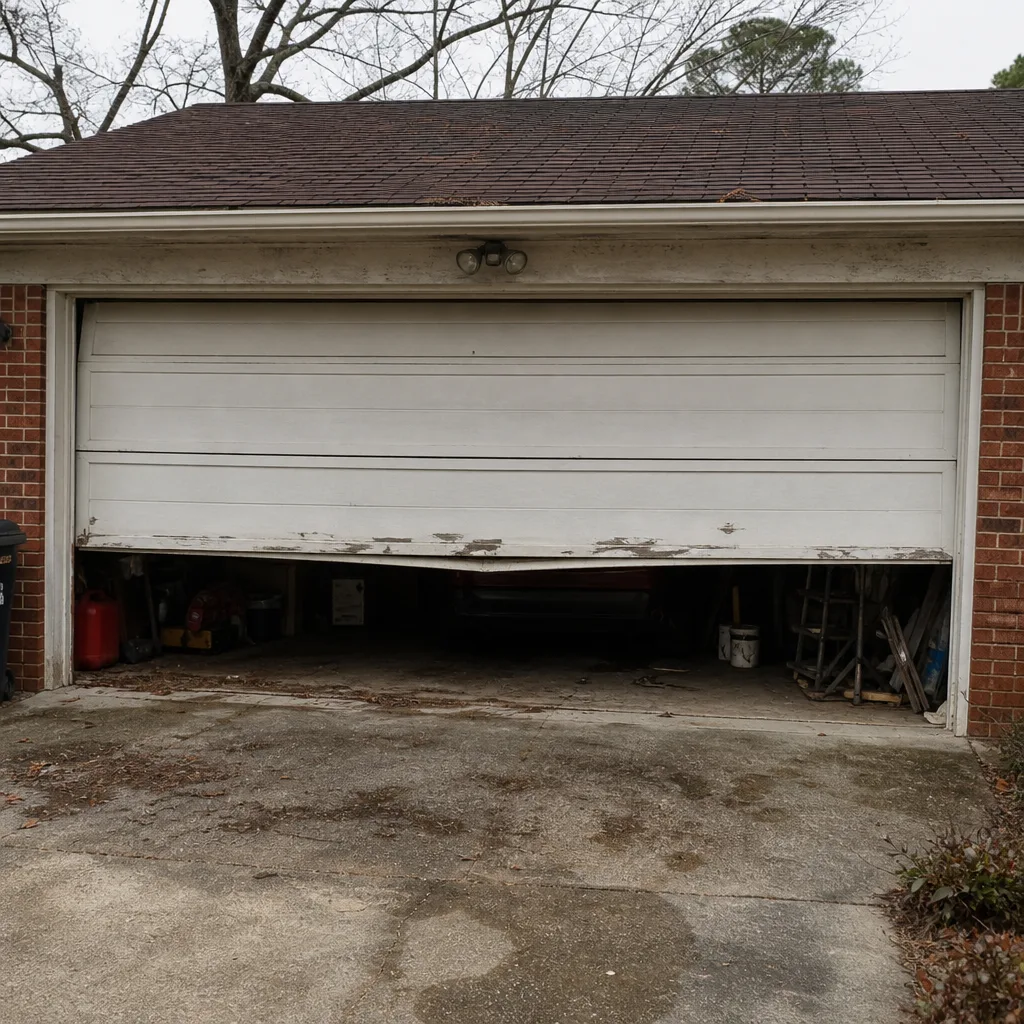 Before
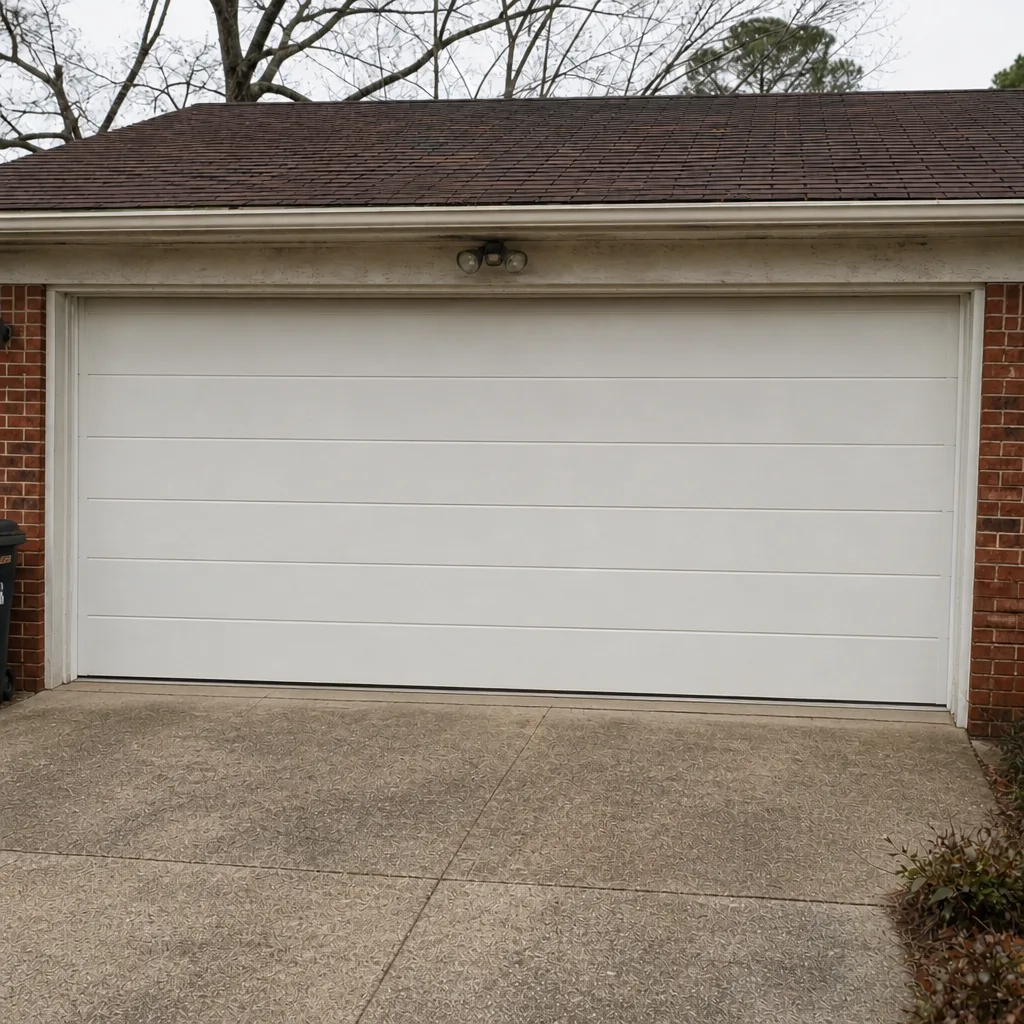 After
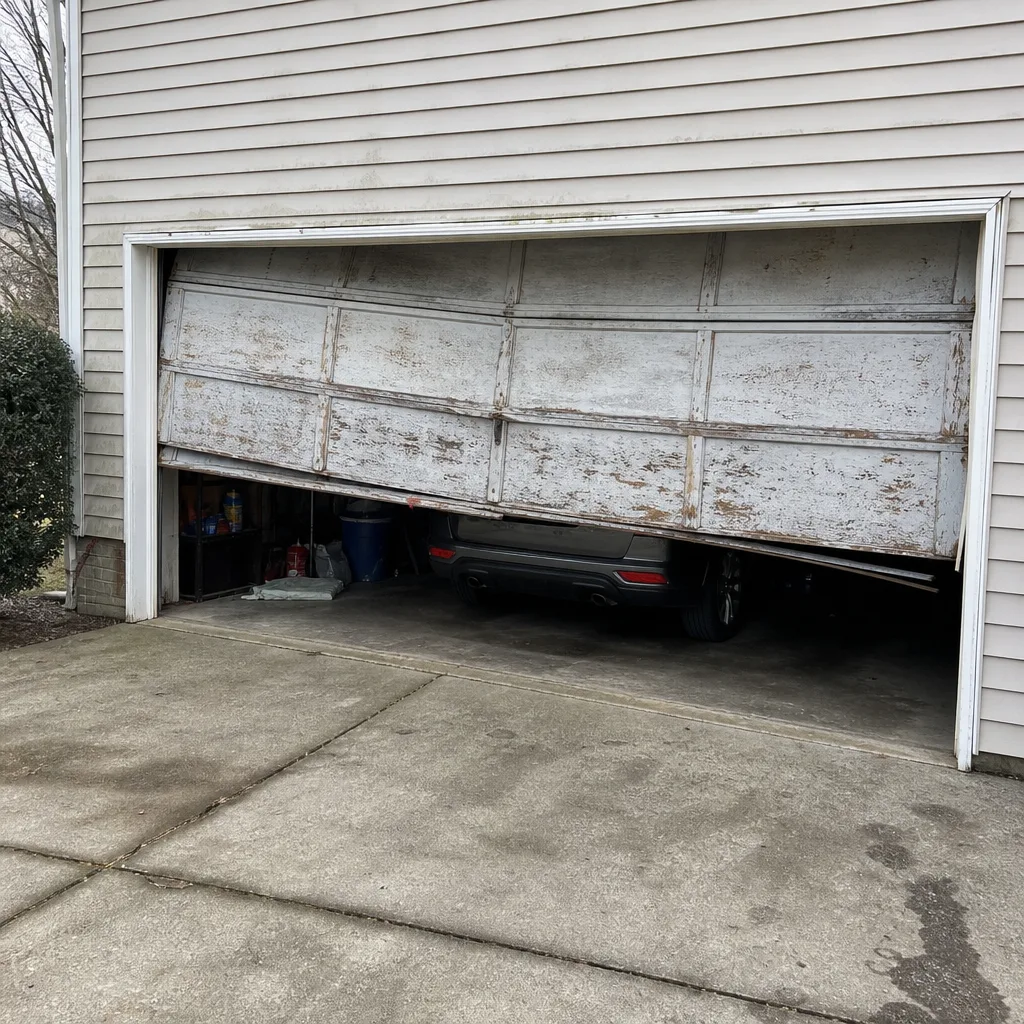 Before
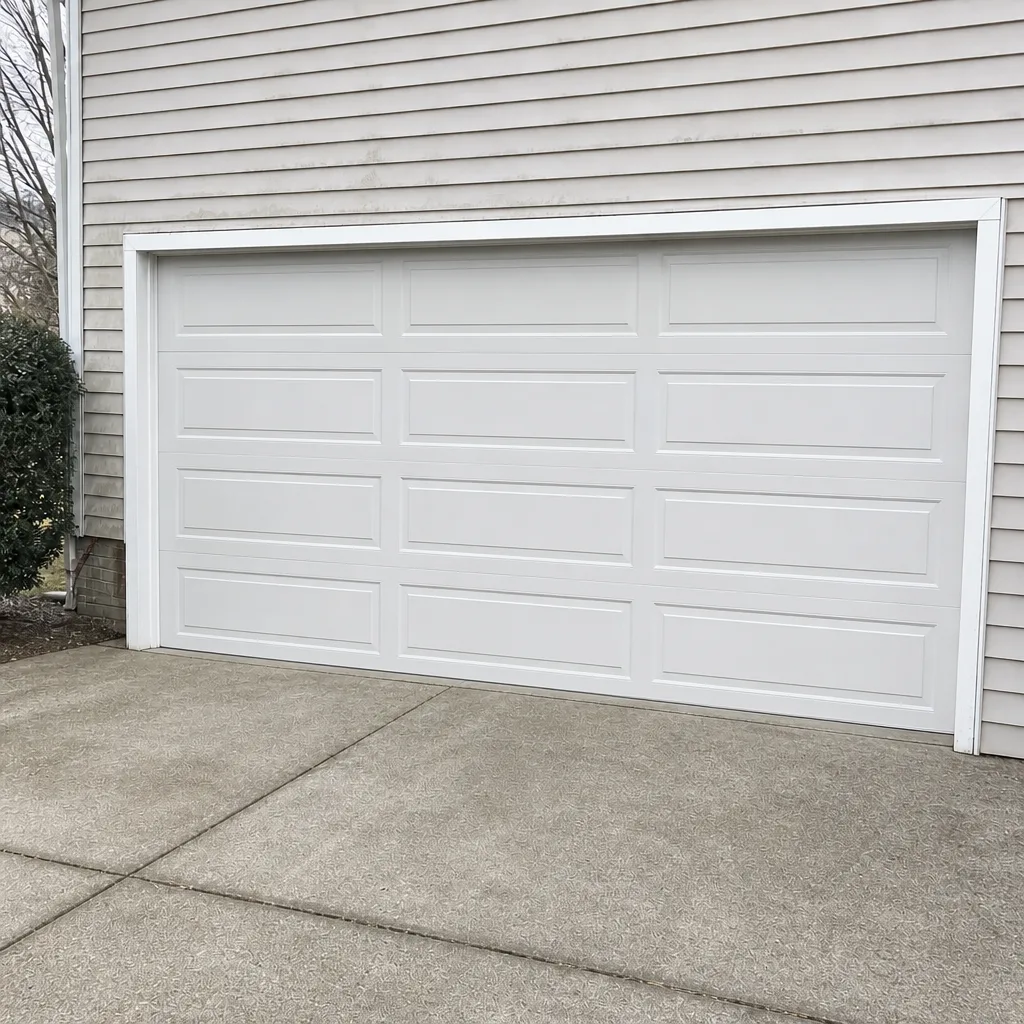 After
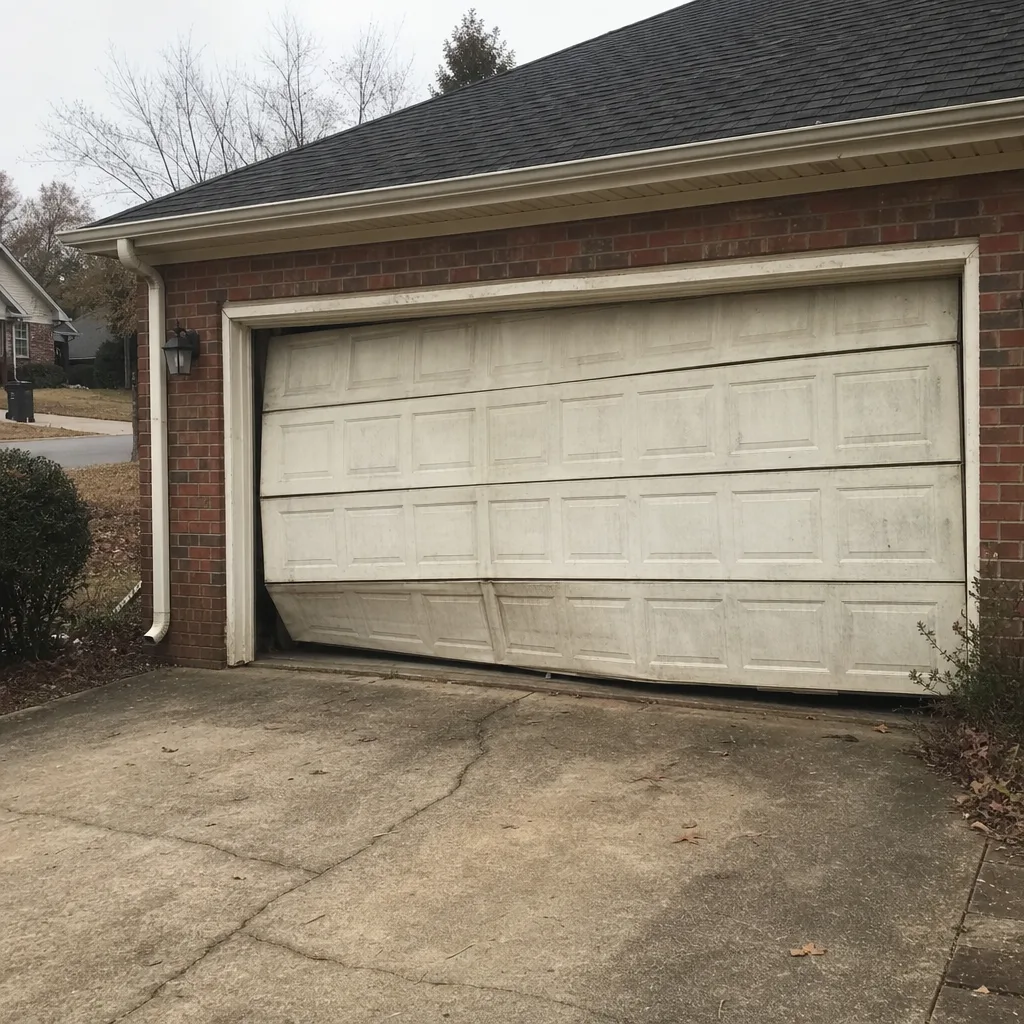 Before
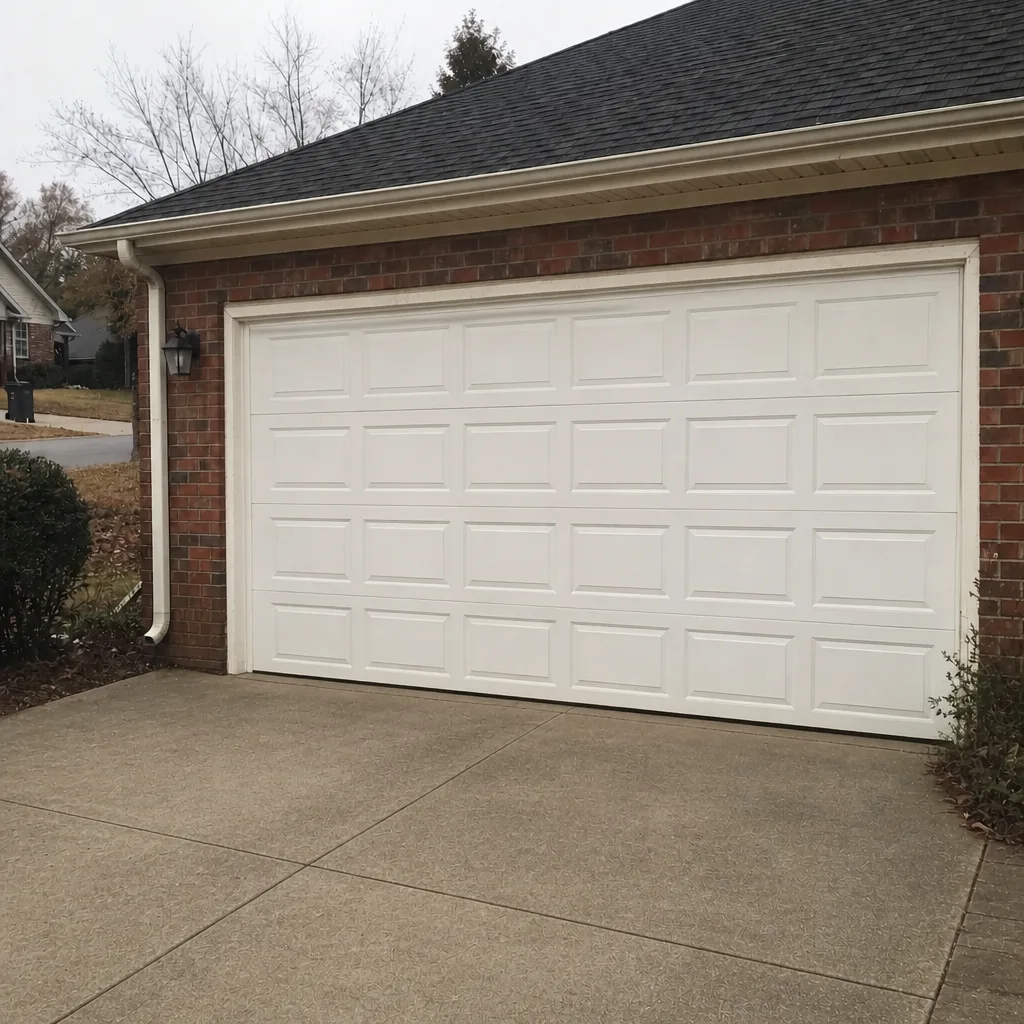 After
When to Call a Professional
Some garage door projects in High Point are straightforward swaps. Others need a trained hand. Call a professional if any of these are true: the door is sagging or off balance, a spring or cable has broken (they’re loaded under high tension and can cause serious injury if disturbed), the opener is tripping the breaker, or the project involves changing the opening size or adding new electrical. We recommend a trained professional for anything involving high-tension springs, the torsion shaft, or electrical panel work – that’s not a job to attempt because a video online made it look simple.
Arrow Garage Door Service offers free estimates in High Point – call (833) 842-1974. We work on the brand you already own, across LiftMaster, Chamberlain, Genie, Clopay, Amarr, Wayne Dalton, Craftsman, and Raynor. Our technicians have up to 15 years of experience, and we can help you figure out where your project sits on the permit line before anything gets ordered. Our High Point service page lays out the full set of services we handle.
Frequently Asked Questions
Not usually, if the new door uses the same rough opening and same size and no structural or electrical work changes. Any change to the opening size, the header, or the opener’s electrical wiring generally does require a permit from the City of High Point. When unsure, call the city’s building department before ordering the door – a one-minute conversation is worth it. Call (833) 842-1974 for a free estimate on the installation itself; the written price is set before any work starts.
Yes, when the new opener plugs into an existing GFCI-protected outlet and no new wiring is being run. A new dedicated circuit from the breaker panel is permit work under the North Carolina Electrical Code. The distinction is the wiring, not the opener. Call (833) 842-1974 – estimates are free and we’ll tell you what to expect.
Same rough opening, same door dimensions, same structural framework, same electrical supply. If any one of those changes, the work is no longer just a replacement and should be treated as a permit-required project. The old door’s exact size is on the manufacturer’s sticker on the inside of the old door or in the opener’s original manual, so it’s worth photographing before it goes to the dumpster. Call (833) 842-1974 for a free measure and written estimate.
The buyer’s home inspector will flag it, and the buyer’s agent will ask for an inspection or repair before closing. In most cases you’d end up either pulling the permit retroactively (with associated inspection risk) or providing a credit. Getting the permit right upfront is almost always cheaper. Call (833) 842-1974 if you’re trying to figure out what needs correcting on an existing job – estimates are free.
No. The written estimate sets the price, in full, before any work starts. If we open a wall or find a problem the estimate didn’t cover, we stop and let you know in writing before continuing – no surprise invoices. Call (833) 842-1974 for a free estimate; the written quote is the price.
In most High Point residential cases, the licensed contractor pulls the permit with the homeowner’s written authorization, and the homeowner keeps the signed-off documentation after final inspection. If you’re doing part of the work yourself, ask the city whether an owner-builder permit applies to that portion. Call (833) 842-1974 if you’d like to talk through the sequence before scheduling.
The Bottom Line
The permit question on a garage door project in High Point usually has a simple answer – no permit for a true like-for-like swap, a permit for anything that changes the opening, the structure, or the wiring. The complexity is in the details: “same rough opening” means same exact dimensions, “same electrical” means no new circuit, and “same structure” means the header untouched. When any of those changes, get the permit pulled, the rough-in inspected, and the final signed off before the job is closed out. The paperwork protects your sale, your insurance claim, and your own nights of sleep. If you want to know exactly where your project sits on the permit line, call Arrow Garage Door Service at (833) 842-1974 for a free estimate. We answer 24/7. Fast dispatch from 7am to 7pm, Sunday through Friday.
Written by the team at Arrow Garage Door Service.