
Last updated November 15, 2026
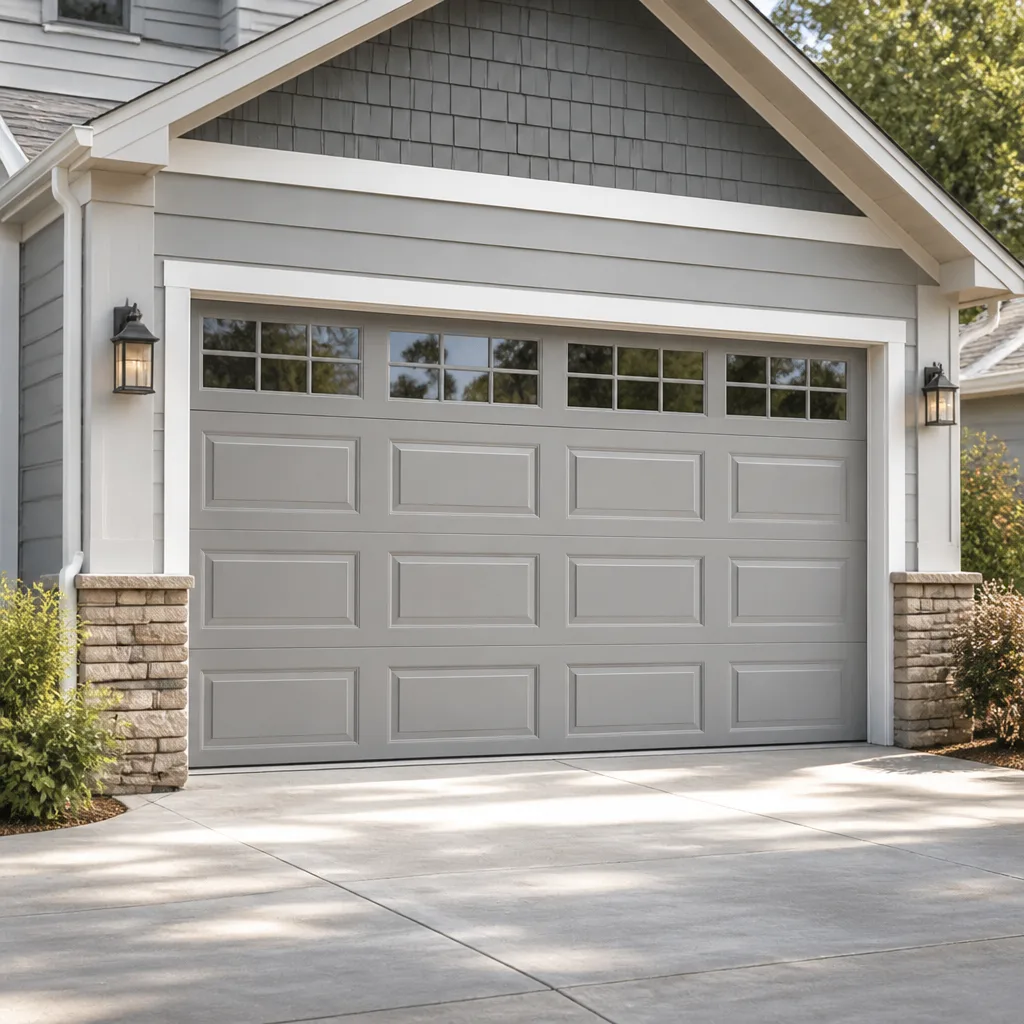 Raised-panel steel
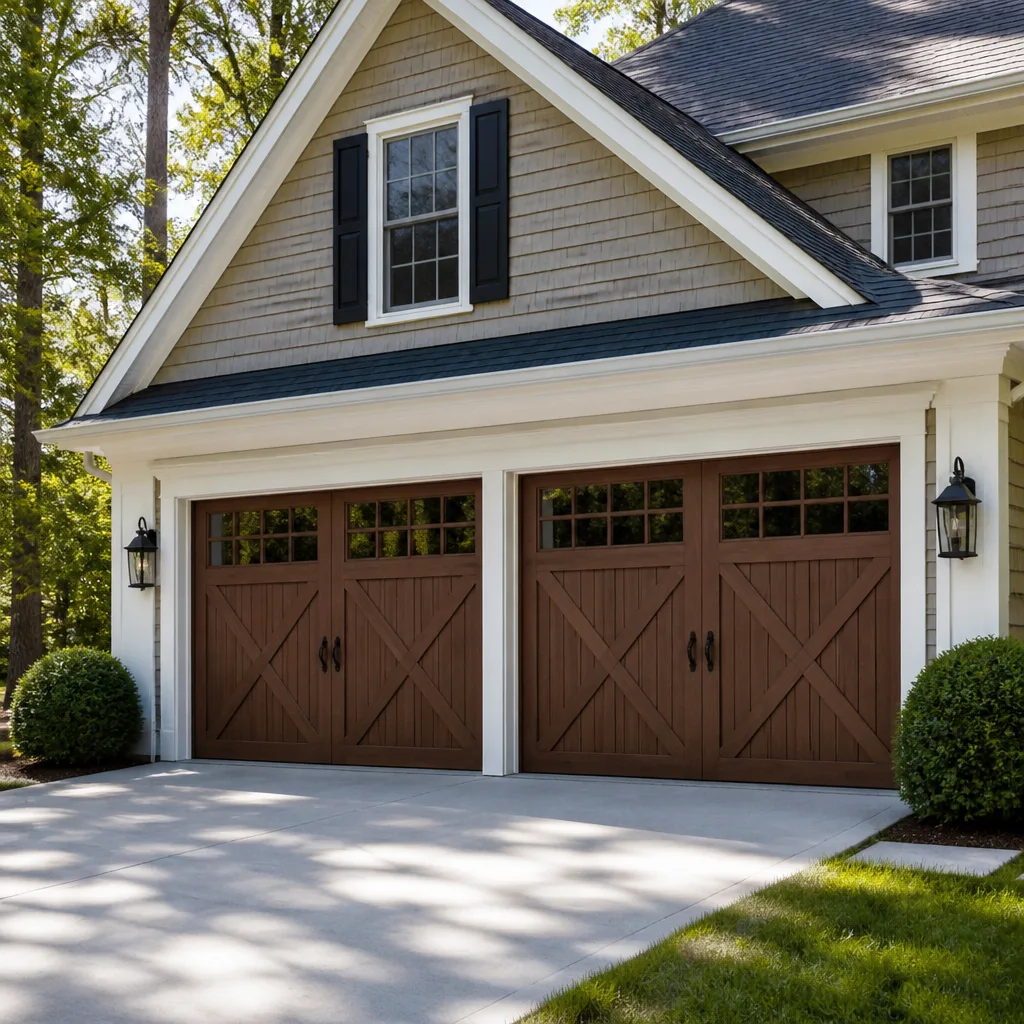 Carriage house
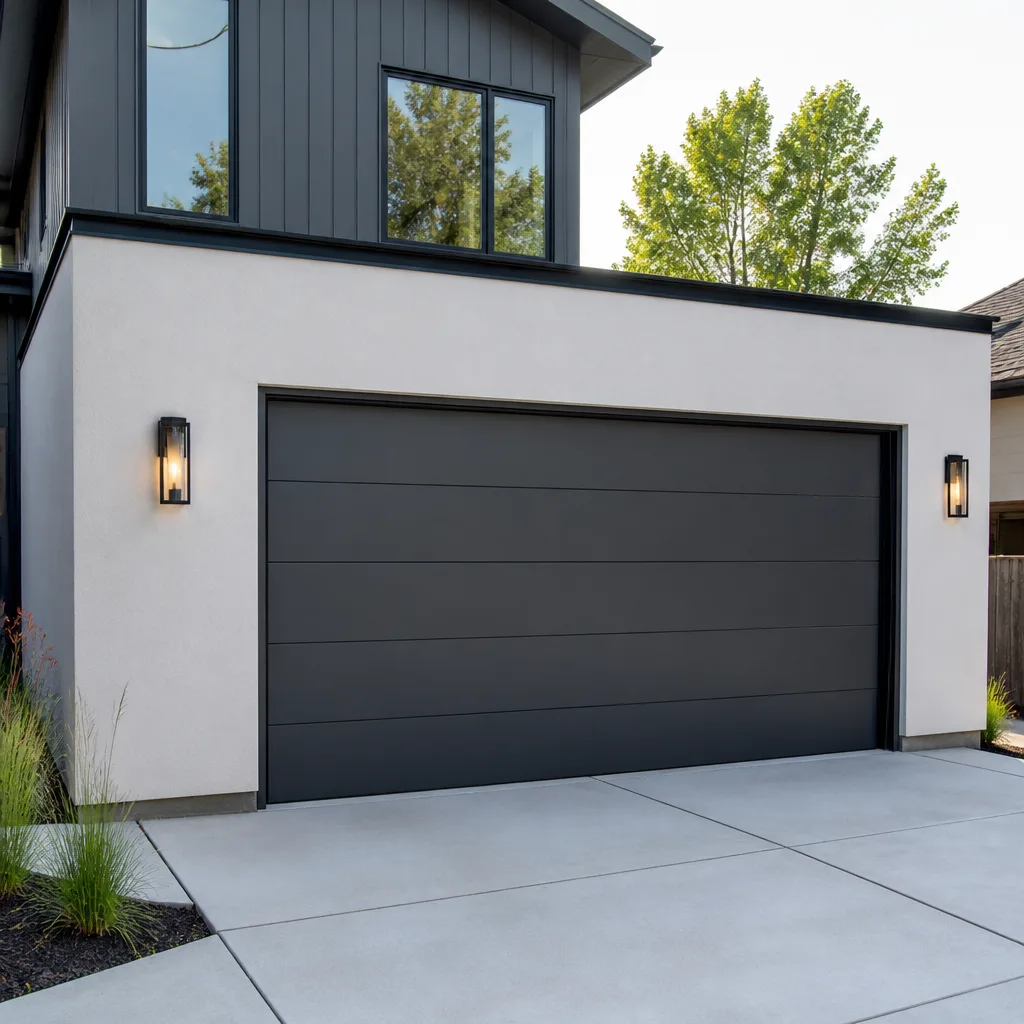 Modern flush
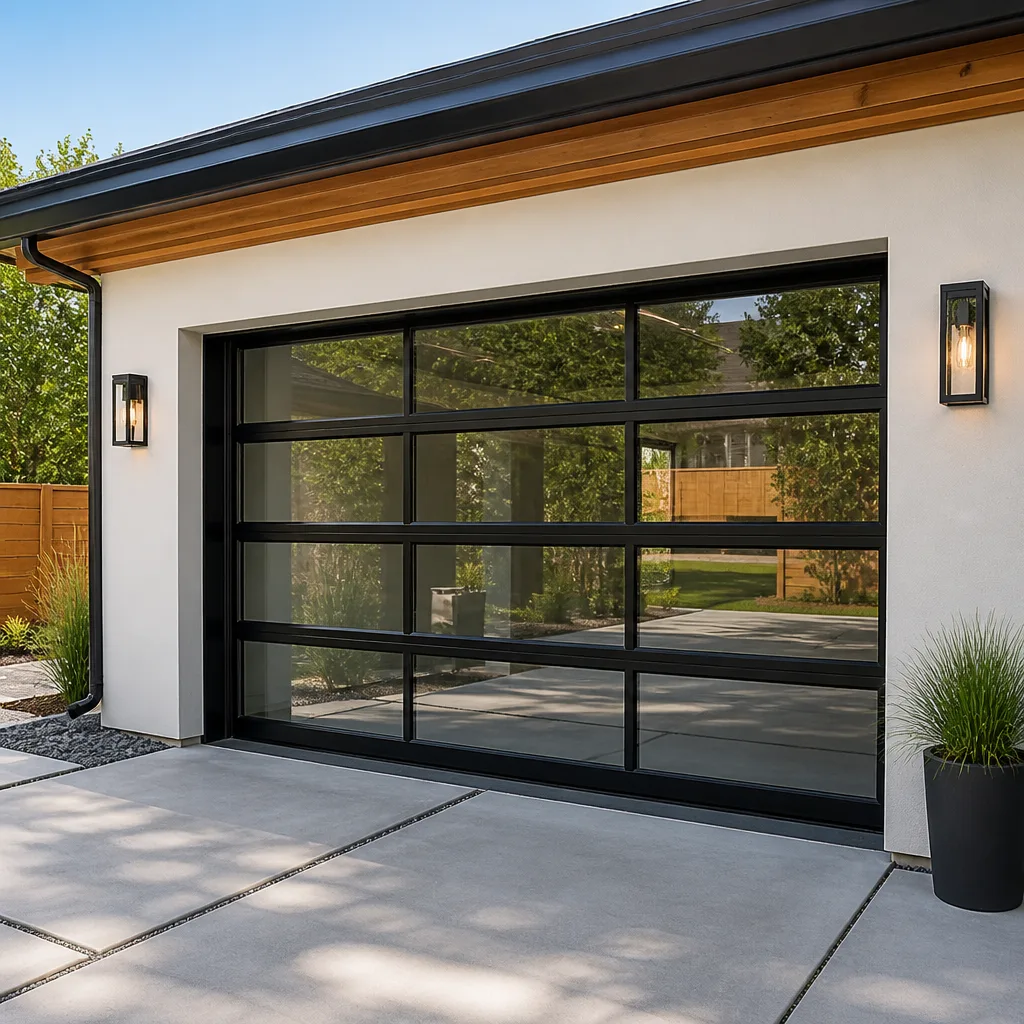 Full-view glass
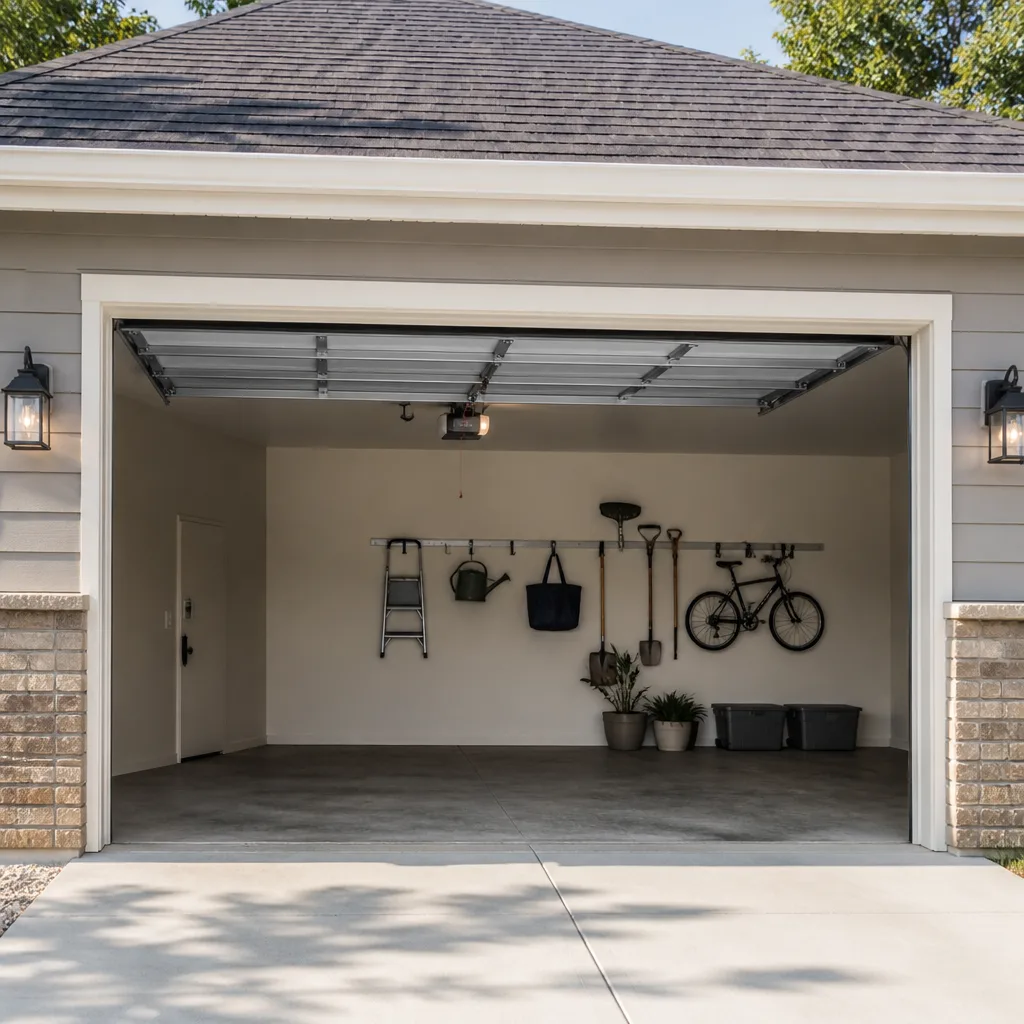 LiftMaster openers
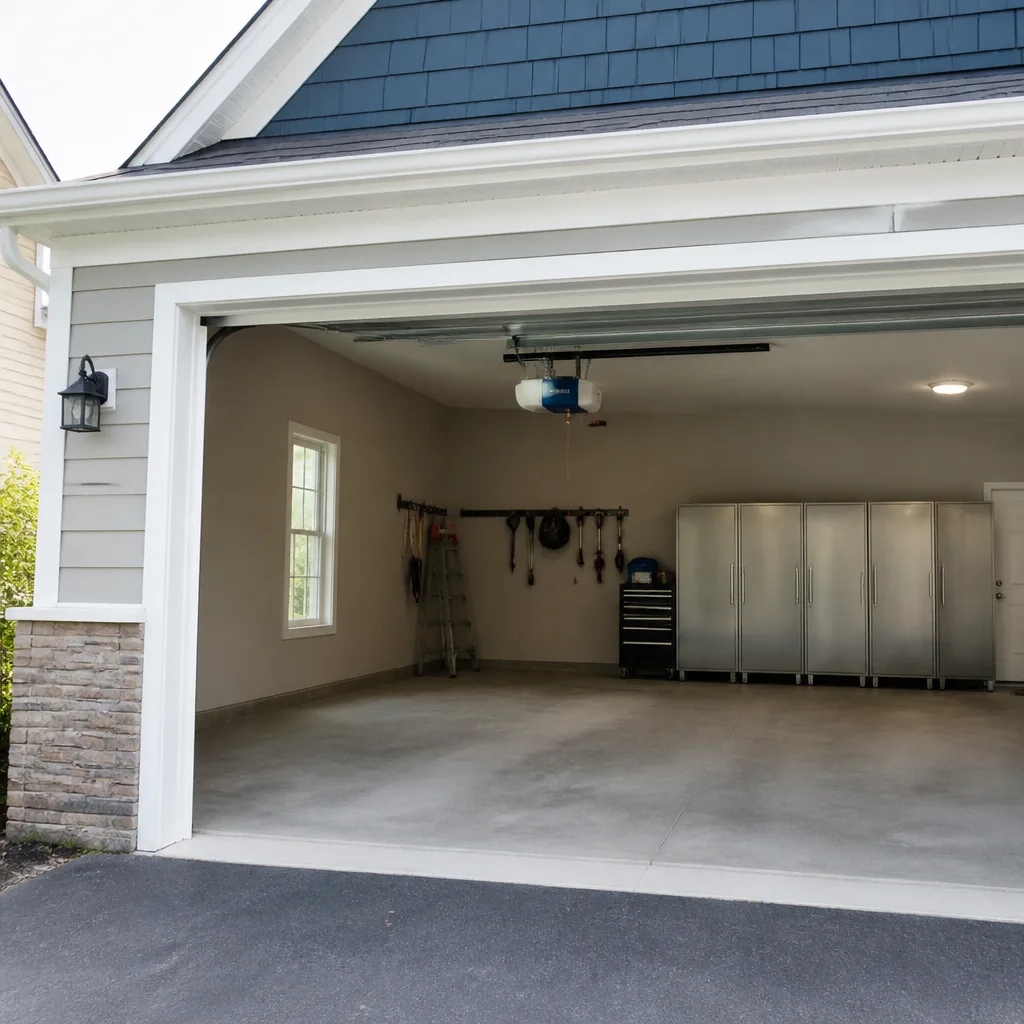 Chamberlain openers
Full 25-point door and opener safety check with every visit - springs, cables, rollers, tracks, and your LiftMaster or Chamberlain opener included
You get a price before we start. It does not change when the pro arrives.
Get your free estimateGarage Door Repair Troubleshooting in High Point: Common Problems and How to Fix Them
The door that “just stopped working” almost never fails without warning. What usually happens is that a homeowner heard the warning signs for weeks – a rattle on the way up, a pause before the door reversed, a slight lean to one side – and didn’t know what any of it meant until the door quit moving altogether. Garage doors aren’t complicated machines. They run on four mechanical systems, and nearly every failure traces back to one of them. This guide teaches you to diagnose by symptom in High Point: match the behavior you’re seeing to the system that’s actually at fault, and you’ll know what’s wrong before you touch anything.
Quick Answer
Most garage door problems in High Point trace to one of four systems: springs (the door feels heavy or won’t lift), cables and drums (the door hangs crooked or makes a snapping sound), tracks and rollers (grinding, scraping, or binding), or the opener’s logic board and sensors (the door reverses, won’t respond, or runs but the door doesn’t move). Diagnose the symptom first, then the system. Anything involving torsion springs, cable drums, or bottom bracket bolts is a job for a trained technician – those components store enormous tension and cause the majority of garage door injuries.
Styles & brands we work with
- Raised-panel steel
- Carriage house
- Modern flush
- Full-view glass
- LiftMaster openers
- Chamberlain openers
Table of Contents
- Symptom-to-System Mapping: Diagnose Before You Touch
- Spring Failures: The Most Common Cause of a Dead Door
- Cables, Drums, and a Crooked Door
- Tracks, Rollers, and the High Point Humidity Factor
- Opener Problems: Logic Boards, Sensors, and Remotes
- The 60-Second Manual Release Test
- Three Things You Should Never Adjust Yourself
- When a “Quick Fix” Backfires
Symptom-to-System Mapping: Diagnose Before You Touch
The single biggest mistake in DIY garage door troubleshooting is starting at the wrong end – trying to fix the opener when the problem is mechanical, or buying new rollers when the spring is gone. Before you do anything, write down exactly what the door is doing. The symptom narrows the field to one of four systems almost every time.
Here’s the mapping we use on Arrow Garage Door Service calls, built from the range of failures we see across High Point:
- Door won’t lift at all, and the opener hums once then clicks off – spring or opener gear. The opener hum is the motor trying to lift a weight it can’t move.
- Door opens a few inches then stops – travel-limit settings on the opener, or a binding track. Look for shiny scrape marks along the horizontal track.
- Door moves slowly or feels “heavy” – spring tension lost, or a failing torsion spring on one side.
- Door hangs crooked at the top or bottom – a snapped cable, a slipped cable drum, or one side of a two-spring setup that has failed.
- Loud grinding or scraping sound – worn nylon rollers, dry torsion shaft bearings, or metal-on-metal track damage.
- Door reverses immediately after touching the floor – safety sensor misalignment, or a limit switch set too low.
- Opener runs but the door doesn’t move – broken or disengaged trolley, stripped gear in the opener, or a door still in manual release mode.
- Uneven side-to-side motion with a wobble – bent track, or a roller that has left the track.
Notice how many of these symptoms point to mechanical failures that look like opener failures. An opener making a noise but not lifting the door is almost never the opener’s fault. Before you buy a new opener, verify the door itself moves freely with the opener disconnected. That one test will save you an unnecessary replacement more often than not.
If the symptom points toward electronics, sensors, or remote issues rather than the door itself, our garage door opener repair team handles brand-agnostic diagnostics on the systems most High Point homes run: LiftMaster, Chamberlain, Genie, and Craftsman.
Spring Failures: The Most Common Cause of a Dead Door
Torsion spring failure is the most common single failure point on any garage door, and the easiest to spot from a distance. A broken torsion spring usually shows a visible gap in the coil – look at the horizontal shaft above the door and scan for a section that’s no longer a continuous spiral. A broken extension spring shows a gap in the stretch spring running along the horizontal track, or a dangling, coiled cable.
What springs do is counterbalance the door’s weight. A standard two-car door weighs a couple hundred pounds, and the spring system removes enough of that weight that you can lift the door one-handed. When a spring snaps, the door suddenly weighs what it actually weighs. If you can’t lift it with one hand from a closed position, the counterbalance has failed, and that’s the answer to 90% of “the door just stopped working” calls.
Three things most homeowners get wrong about springs:
- They assume one spring means one replacement. Nearly all modern doors use a matched pair. Replacing one spring of a pair leaves the door out of balance and shortens the life of the new spring, because the older one is dragging it out of sync. We replace pairs, not singles.
- They buy the wrong spring. Springs are rated by wire gauge, inside diameter, and length, which together determine the torque rating. A spring rated for a 90 lb door will not lift a 130 lb door safely. This isn’t a component you can eyeball at a hardware store.
- They don’t write down the cycle count. Springs are rated in cycles (one cycle = one open + one close). Most residential springs are rated for 10,000 cycles, which works out to roughly seven to ten years of typical household use. High-cycle springs exist and cost more, but they’re worth considering if your door runs many times a day.
Spring replacement in High Point typically runs $180 to $340 per spring depending on size, door weight, and cycle rating. A matched pair runs about twice that. The price is quoted and agreed before any work starts – not estimated after the fact. Call (833) 842-1974 to get a written estimate.
Cables, Drums, and a Crooked Door
Lift cables are the two steel cables running along the sides of the door, wound around the cable drums at the top of each corner. Their job is simple: keep the door level as it travels. When a cable snaps or slips off a drum, the door drops on one side, twists in the track, and won’t run.
High Point’s humidity cycles are hard on cables. Every time moisture gets into a cable’s internal strands and then dries out again, the steel loses a fraction of its strength. It’s not dramatic, but it’s cumulative, and cables that are ten years old in this climate are weaker than cables that are ten years old in Arizona. That’s one reason we see more cable failures on doors that have never had a mechanical issue in their history – the cable itself just gave up.
Cable problems show up in a few predictable patterns:
- Door hangs visibly crooked – a snapped cable on one side. Do not try to open the door in this state; the remaining cable and the springs are now bearing a load they weren’t designed for.
- Loud “pop” followed by a hanging door – cable drum slipped or the cable spooled off. Cables and drums are under the same tension as springs.
- Frayed cable visible near the drum – replace it before it fails. Frayed strands cut hands and can jam the drum.
- Cable jumped its track – often follows a worn roller or a slight track misalignment. Both need correcting at the same time or the cable will jump again.
We handle cable and drum work as part of our garage door repair service line. Because cables interact with springs, tracks, and rollers, we inspect all four systems before replacing anything – a snapped cable on a door with bent tracks and shot rollers is a different job than a snapped cable alone, and we quote accordingly.
Tracks, Rollers, and the High Point Humidity Factor
Metal tracks and nylon rollers are the parts of a garage door that age slowly and then all at once. Most of that aging in High Point is driven by humidity.
High Point sits in a climate where summer humidity runs high and swings hard between seasons. Wooden garage doors absorb moisture in the wet months, swelling slightly at the stiles and panels, and then dry out and shrink in the fall. That swelling pushes outward against the track, so the door binds on the way up, the opener works harder, and eventually a roller pops out of its track. Paint film fails faster here than in drier climates, which is why wood doors in High Point need repainting on a tighter interval than most manufacturer schedules suggest – every few years, not every seven.
Steel tracks in this climate don’t literally corrode from the air alone, but untreated track hardware and dry shaft bearings will corrode where moisture collects. Worn finishes on rollers, hinges, and bottom brackets rust first, and rust eats rollers faster than use does. It’s an easy thing to check yourself: if any roller won’t spin freely between your fingers, it’s dragging on the door and needs to go.
Track and roller issues you can spot from the ground:
- Shiny, scraped marks along the inside of the vertical or horizontal track (a binding door).
- Roller stems bent or rollers visibly out of their track channel.
- A dent in the track from a bumped bumper or a bicycle tire.
- Rust-colored streaks on hinges and rollers (especially after a wet summer).
- The door rocking side to side on the way up (worn track or a bent roller).
Tracks and rollers are the one area most homeowners can safely manage by themselves – cleaning, lubricating, and replacing a nylon roller that won’t spin is a straightforward afternoon job. But anything that involves bending a track back into shape, or dealing with a roller stuck under spring tension, is worth leaving to us. Our technicians have up to 15 years of experience, and this is the kind of problem that eyeballs cleanly once you’ve seen it a hundred times.
Opener Problems: Logic Boards, Sensors, and Remotes
Openers have a mind of their own, but the failures are pretty predictable. The three classic patterns are: the opener runs but the door doesn’t move (mechanical problem, not an opener problem – covered above); the door reverses immediately (sensor or logic board); the opener is dead to every command (power, logic board, or safety sensor).
Logic boards do fail. The most common causes are power surges, lightning strikes on nearby utility lines, and simple age. A logic board that’s failed usually shows up as a system that still has power (lights work, the sensor LEDs are on) but doesn’t respond to remotes, wall buttons, or the app. That’s not a remote programming issue – that’s a dead board. Older Craftsman and Genie units are especially prone to logic board failure after a storm.
Safety sensors are the next most common culprit. Two eyes at the bottom corners of the door, aligned across the opening at about six inches off the ground. If the door reverses as soon as it starts down, check the sensor alignment first. The receiving sensor has a small LED – if it’s not steady (not blinking or off), the sensors are out of alignment, blocked, or the wiring has been damaged. Sunlight straight into the receiving eye can also cause issues in the late afternoon at western exposures.
Remote and keypad issues are usually a programming problem, not a hardware problem. Before you replace a remote, try these in order:
- Change the battery first – this solves more “my remote stopped working” calls than any other single step.
- Try a second remote or the wall button to isolate whether it’s the remote or the opener.
- Re-program the remote using the opener’s learn button (the color matters – each brand and generation uses a different frequency).
- If all remotes fail but the wall button works, the logic board’s radio receiver has likely failed.
We work on LiftMaster, Chamberlain, Genie, and Craftsman opener platforms, plus the Genie and LiftMaster smart-home integrations. If you’re in doubt about which one you have, the brand name is stamped on the opener housing or on a sticker inside the light cover. For more on our opener-specific work in High Point, see our opener repair page.
The 60-Second Manual Release Test
Every garage door opener has a manual release cord hanging from the trolley – the sliding mechanism on the ceiling rail. Pulling this cord disengages the door from the opener, so the door can be raised and lowered by hand. That cord is the single most useful diagnostic tool you own, and using it takes under a minute.
Here’s the test:
- Close the garage door completely. Don’t start from an open position – a door in the up position has energy stored differently and could drop.
- Locate the manual release cord hanging from the trolley on the ceiling rail. It’s usually a red or black cord with a T-handle.
- Pull straight down and toward the door – not sideways. The trolley should click and the door should be free of opener attachment.
- Lift the door slowly by hand to about waist height, then let go.
- Interpret the result. A properly balanced door should stay put at waist height with no hands – that’s what the springs are for. If the door drops, falls slowly, or feels very heavy, the springs are the problem. If the door lifts easily but the opener won’t run it, the problem is in the opener.
This test tells you in under a minute whether the problem is mechanical or electronic, and that’s half the diagnostic work done before you call anyone. In our experience at Arrow it also cuts down on wrong-part replacements – a lot of homeowner-bought openers sit in garages because the original opener wasn’t the problem in the first place.
When you’re done with the test, reengage the trolley by running the opener (with the door closed) – it will pick up the trolley on the next cycle. If the door balance test showed a spring problem, leave the door in the down position, disengaged, and don’t try to raise it by hand.
Three Things You Should Never Adjust Yourself
There are three components on a garage door that hold enough stored energy to seriously injure you, and even experienced tradespeople treat them with caution. Those are torsion spring tension, cable drums, and the bottom bracket bolts.
Torsion springs. A wound torsion spring holds hundreds of pounds of stored force. The process of tightening the spring (in the trade, “winding”) requires two specific winding bars and a controlled release, and if either bar slips, the energy releases through the spring, the tools, and your hands. Garage door spring injury statistics from emergency rooms are one of the reasons we treat this as an absolute boundary – no homeowner should wind a torsion spring.
Cable drums. Cable drums are the spools the lift cables wind onto. They sit under the same tension as the springs and are held in place by set screws. Loosen one set screw without first removing the spring tension, and the drum spins free – the cable snaps under load, and the door drops on that side. There is no correct DIY path here.
Bottom bracket bolts. The bracket at the bottom corner of the door connects the door to the lift cable. The bolts holding it are under constant tension, and the bracket is not fixed – it’s under the lift cable’s pull. Loosening a bottom bracket bolt while the cable is loaded will release the cable’s tension through the bracket and the door corner. Never back out a bottom bracket bolt with the door closed and the cable attached.
What’s safe for DIY: rollers, hinges, lubricating the tracks and springs with a silicone-based product (never grease on the springs), cleaning the sensor lenses, and replacing opener remotes and batteries. Everything else – springs, cables, drums, brackets, the torsion shaft – call us. If you’re already in trouble with any of these components, don’t force the door. Stop, note the symptom, and call.
When a “Quick Fix” Backfires
Two bad habits turn a modest repair into a much bigger bill. The first is forcing a stuck door by hand. The second is bypassing the safety sensors.
Forcing a stuck door does one of two things. If the door is bound in the track, forcing it bends the track and can rip a roller off. If the springs have failed, the door is dead weight and forcing it overloads the opener’s gears. A $180 spring replacement becomes a spring plus two tracks plus a bent panel plus a stripped opener gear – and that’s before we talk about an injury. When a door won’t move under its own power, the safe move is to stop and diagnose, not to wrestle it.
Bypassing the safety sensors – either by disconnecting them, tying them out of the way, or holding the wall button to force the door past a fault – is worse. The sensors exist so the door reverses if something is under it. A door that ignores its sensors is a door that closes on whatever is under it, and that includes people. We’ve been in a High Point garage where a sensor had been bypassed for over a year, and the homeowner had stopped using the door with cars inside entirely – they were afraid of it. That’s the failure mode. Not a jammed door, but a door nobody trusts.
The third bad habit is a wrong-part swap. Buying a universal spring at a hardware store and installing it because it “looks the same” is how doors end up out of balance with a mismatched pair that fails again in a year. Springs, cables, and rollers are door-specific, and the correct part is determined by door weight, not by visual similarity. Straight diagnosis, straight price, right part, once.
Common Mistakes to Avoid
- Calling the opener before testing the door. Run the manual release test first. Half the “dead opener” calls we get in High Point turn out to be a failed spring the homeowner never noticed because the opener is what usually makes the sound.
- Replacing one spring in a pair. Two springs are matched to each other and to the door. Replacing one leaves the door out of balance and forces the new spring to work much harder than it should.
- Greasing the springs. Silicone spray on metal-on-metal contact is fine, but grease on a torsion spring attracts grit that eats into the coils. Use a silicone-based lubricant and go easy.
- Ignoring a slow-down on the way up. If your door pauses at a certain point at a certain height, it’s binding. High Point’s humidity makes wood doors bind and release as the seasons turn, and the binding is the warning – not the eventual snap.
- Pulling the manual release cord sideways. A sideways pull can disengage the trolley on only one side, leaving the door hung up at an angle. Always pull down and toward the door.
- Wiring a new opener to the old button and sensor wiring. A modern LiftMaster or Chamberlain opener needs modern sensor wiring. Old wiring can pass a signal that looks fine and then fails under load. If you replace an opener, budget to replace the low-voltage wiring too.
- Walking away from a jammed door and forgetting it. A stuck door holds energy in the springs and cables that isn’t meant to sit unattended. Have it repaired or have it fixed in the down position and disconnect the release cord.
See the difference
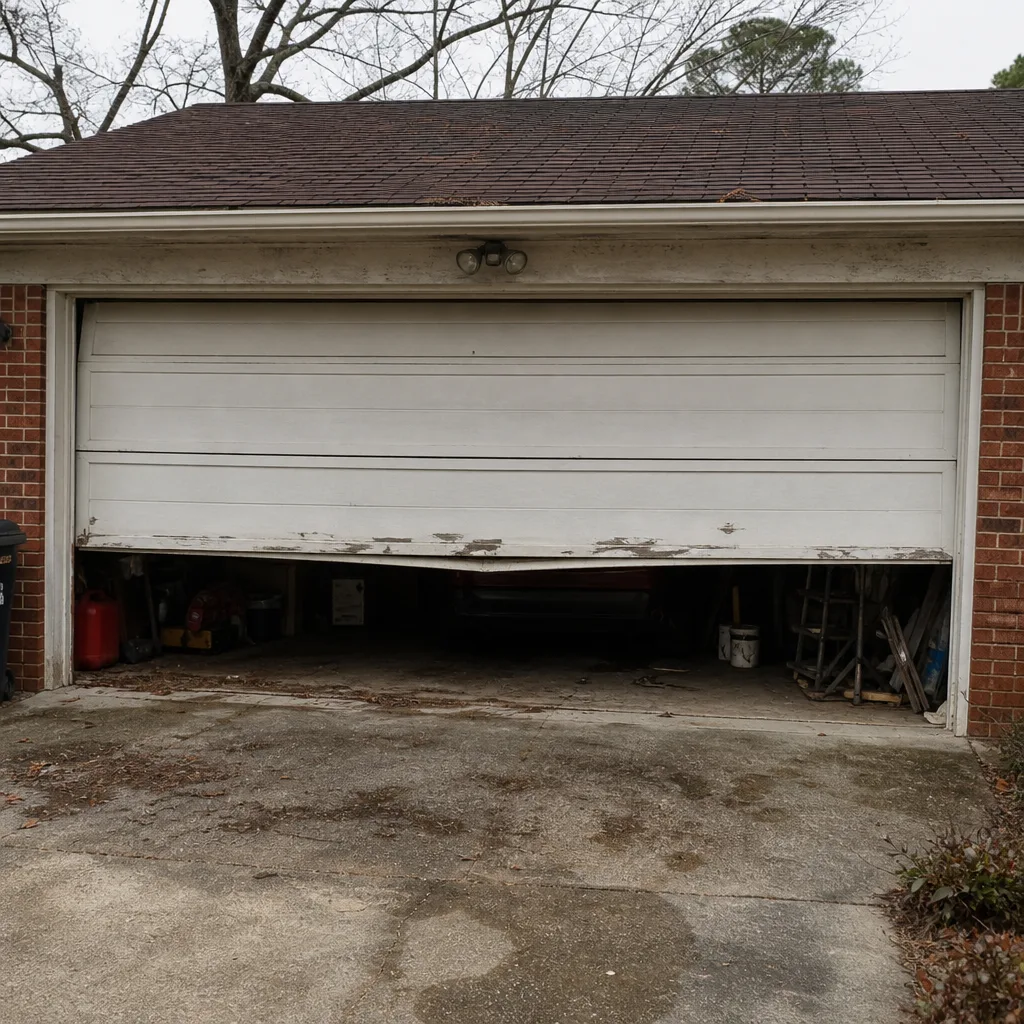 Before
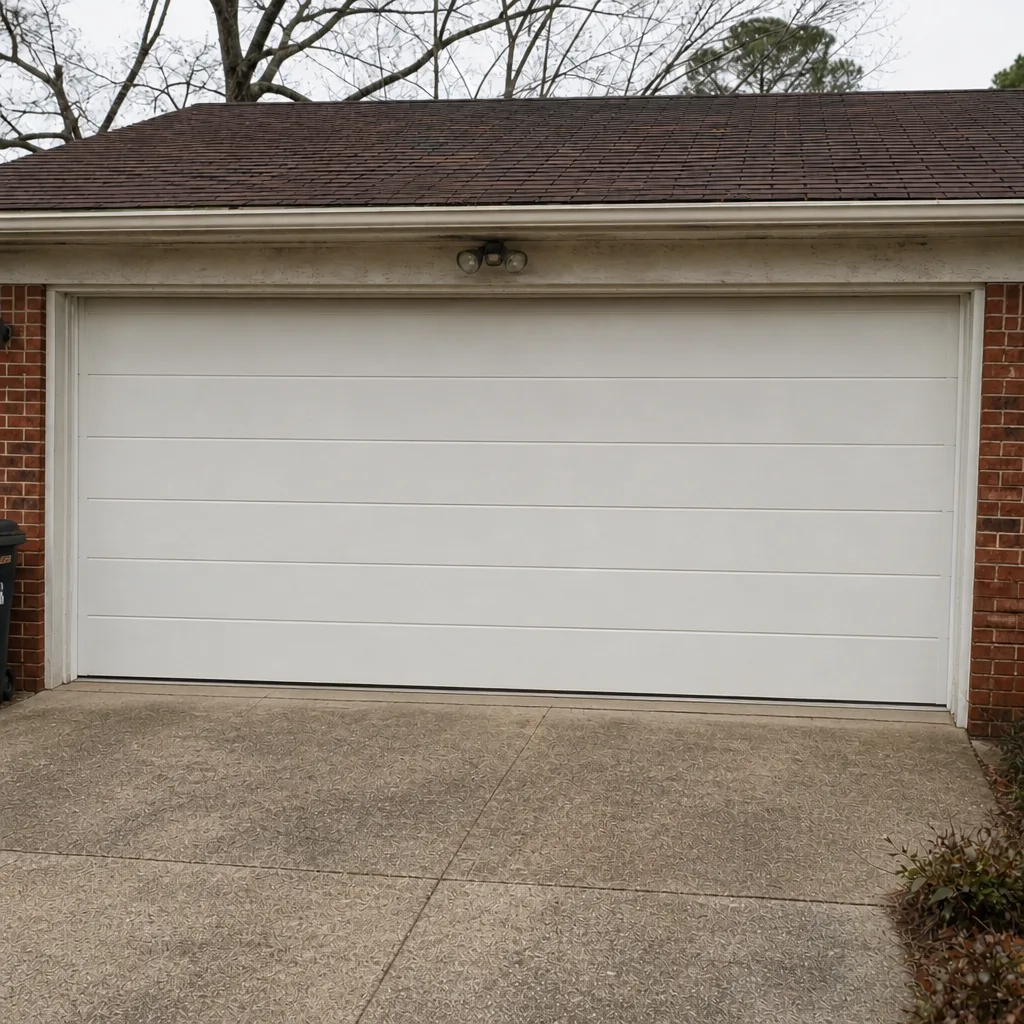 After
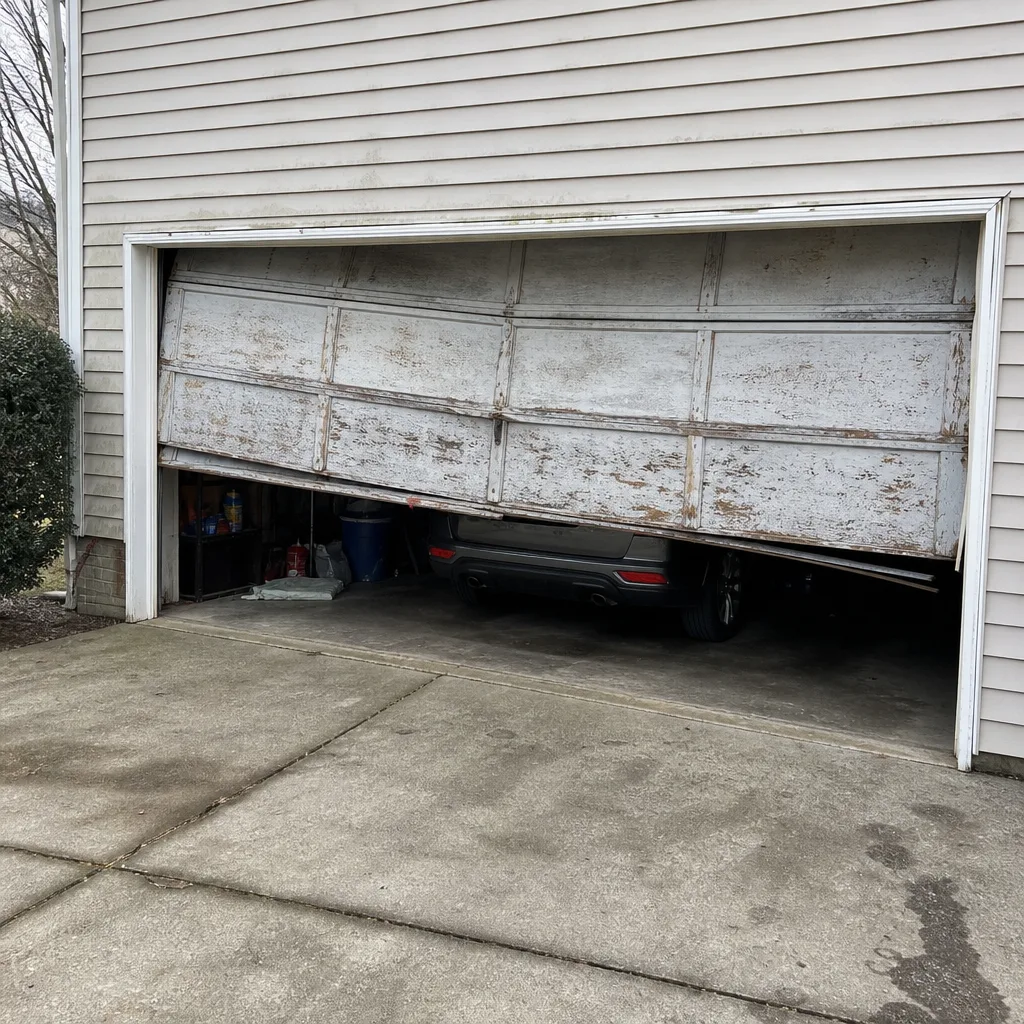 Before
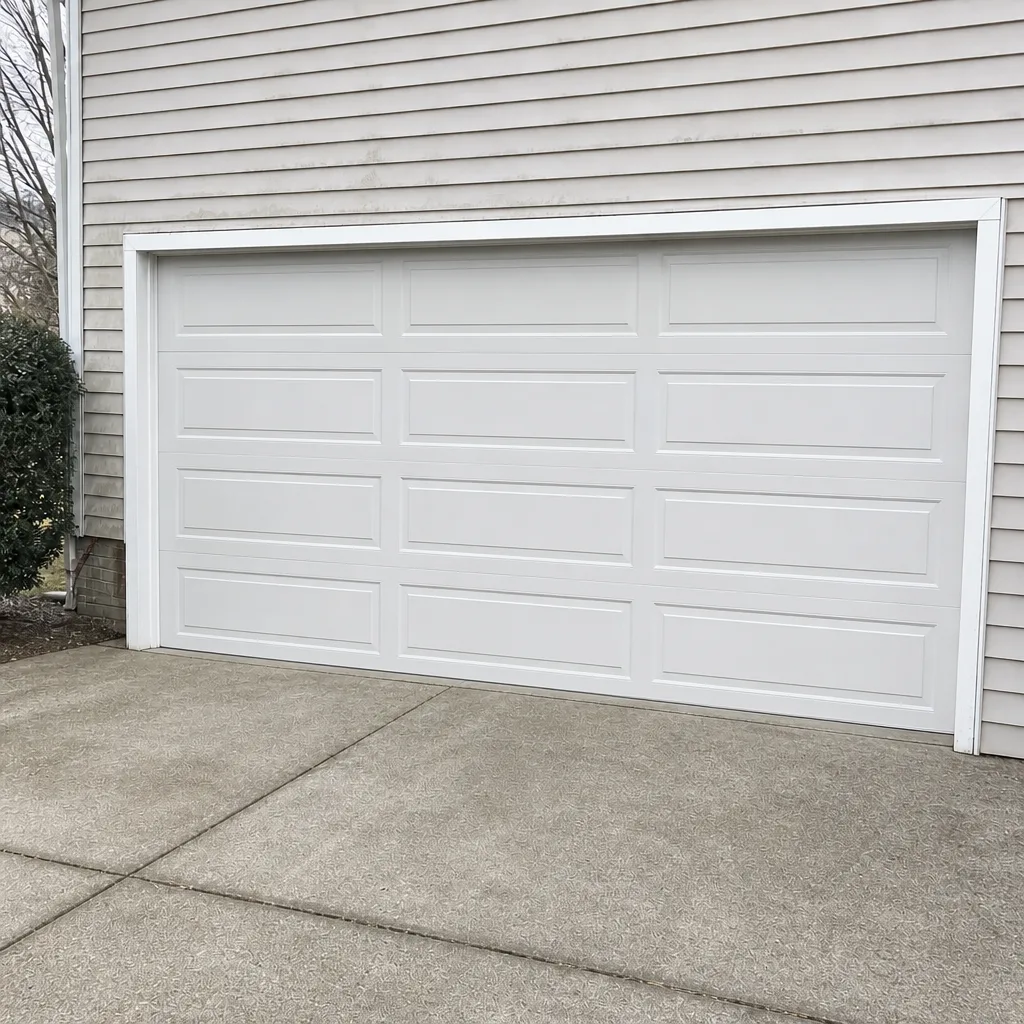 After
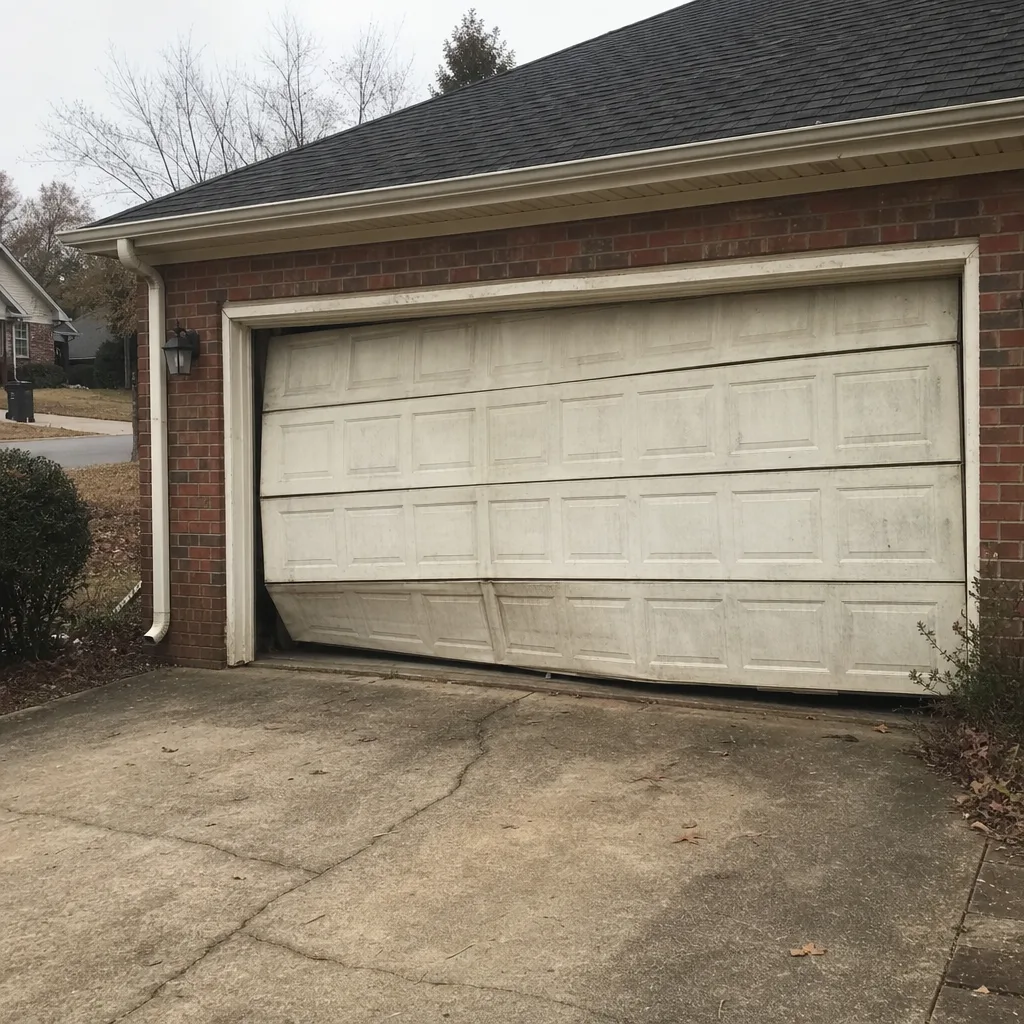 Before
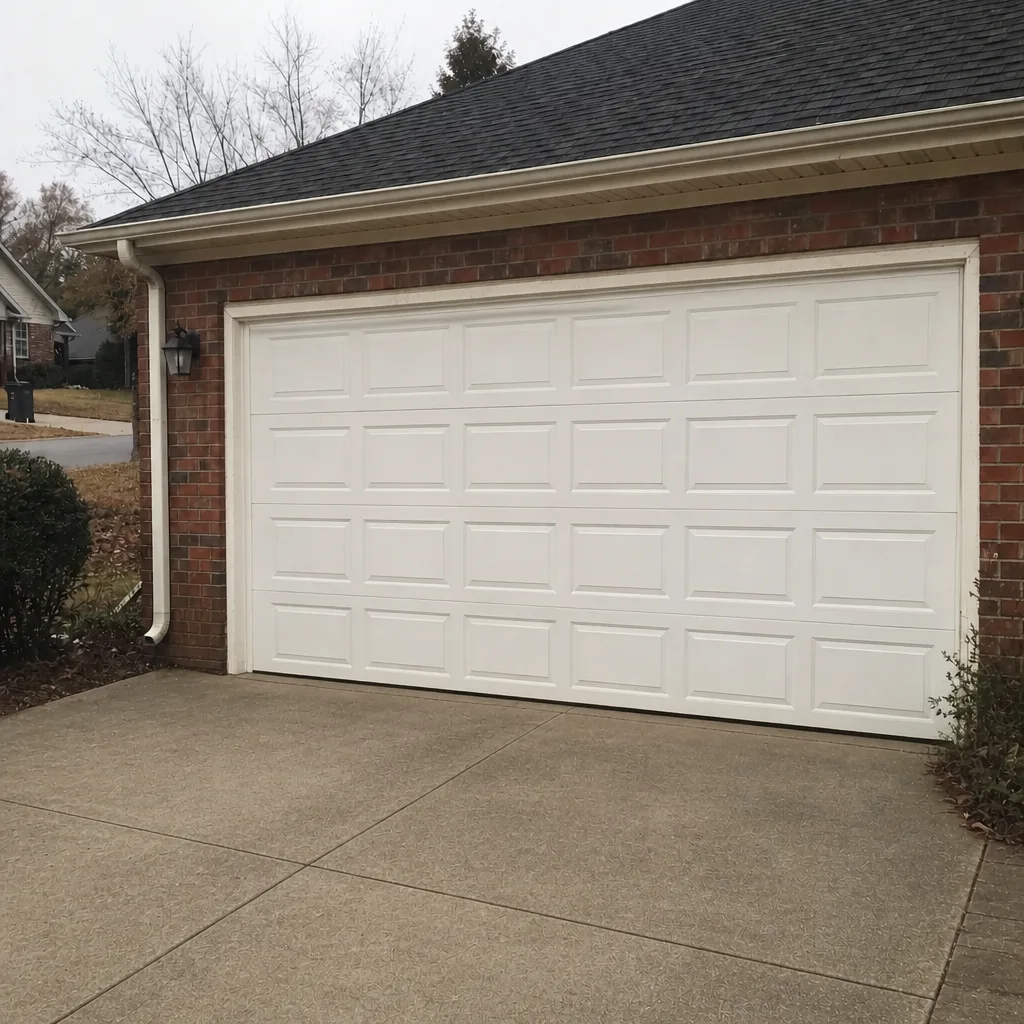 After
When to Call a Professional
Call a technician when the manual release test shows the door is heavy or drops – that’s a spring or cable problem you shouldn’t handle. Call when the door hangs crooked, when a bracket or cable looks stressed, or when the opener runs but the door doesn’t. Call if you’re unsure which system is at fault, because a wrong diagnosis costs more than a diagnostic visit. And call if any part of the door looks bent, twisted, or has dropped part way.
We know garage doors, and that’s all we do. Arrow Garage Door Service handles all three service lines – repair, opener repair, and new installation – with no handoffs, and we work on Clopay, Amarr, Wayne Dalton, and Raynor doors plus LiftMaster, Chamberlain, Genie, and Craftsman openers. Straight diagnosis, then a written price before anything begins. Arrow Garage Door Service offers free estimates in High Point – call (833) 842-1974. We answer 24/7. Fast dispatch from 7am to 7pm, Sunday through Friday.
Frequently Asked Questions
Sudden failure is usually a snapped torsion spring or a cable that has jumped its drum. If the opener still hums but the door won’t move, the spring has almost certainly failed. If the door hangs crooked, it’s a cable. Run the manual release test and you’ll know within a minute which system to blame. Call (833) 842-1974 for an exact quote – estimates are free.
Spring replacement runs $180 to $340 per spring, and a matched pair runs about twice that. Cable replacement, roller replacement, and track adjustment are usually lower-cost repairs; opener logic board replacement sits in the middle. The written estimate sets the price – you’ll see the number before any work starts, and it doesn’t change once the job begins. Call (833) 842-1974 for an exact quote – estimates are free.
For repair calls in High Point, yes, in most cases. We keep repair appointments fast, with same-day service available. Installation and full replacement are measured and scheduled – that’s a different job and needs the right timeline. We answer 24/7. Fast dispatch from 7am to 7pm, Sunday through Friday. Call (833) 842-1974.
No. We quote before we start, and the written estimate is the price. If we open up a job and find a second problem – which does happen when a spring has been broken for a while and the opener has been run hard – we’ll walk you through it and get your approval before we do anything else. You won’t come back to an invoice bigger than the quote. Call (833) 842-1974 for an exact quote – estimates are free.
Yes. Our technicians are experienced, and our company carries the licensing and insurance the trade requires. Our technicians have up to 15 years of experience, and they work on the full range of door and opener brands rather than a narrow subset. Call (833) 842-1974 to book a free estimate.
Once a year covers most homes in this climate. High Point’s humidity swings put more stress on wood doors and steel hardware than drier areas, so annual service – checking spring tension, lubricating tracks and rollers, and testing the opener’s safety reverse – catches wear before it becomes a failure. Wood doors in particular benefit from repainting more often here than manufacturer guidance suggests. Call (833) 842-1974 to schedule an inspection.
The Bottom Line
Diagnose by symptom, not by guessing. The four systems – springs, cables, tracks and rollers, and the opener – cover nearly every failure, and the manual release test tells you within a minute whether the problem is mechanical or electronic. Never touch the three load-bearing components: torsion spring tension, cable drums, and bottom bracket bolts. Those cause the majority of garage door injuries, and there is no safe DIY path to them. Everything else you can monitor, lubricate, and replace. When in doubt, get a straight diagnosis and a written price before the job starts – and get the door working today.
Written by the team at Arrow Garage Door Service.