
Last updated November 15, 2026
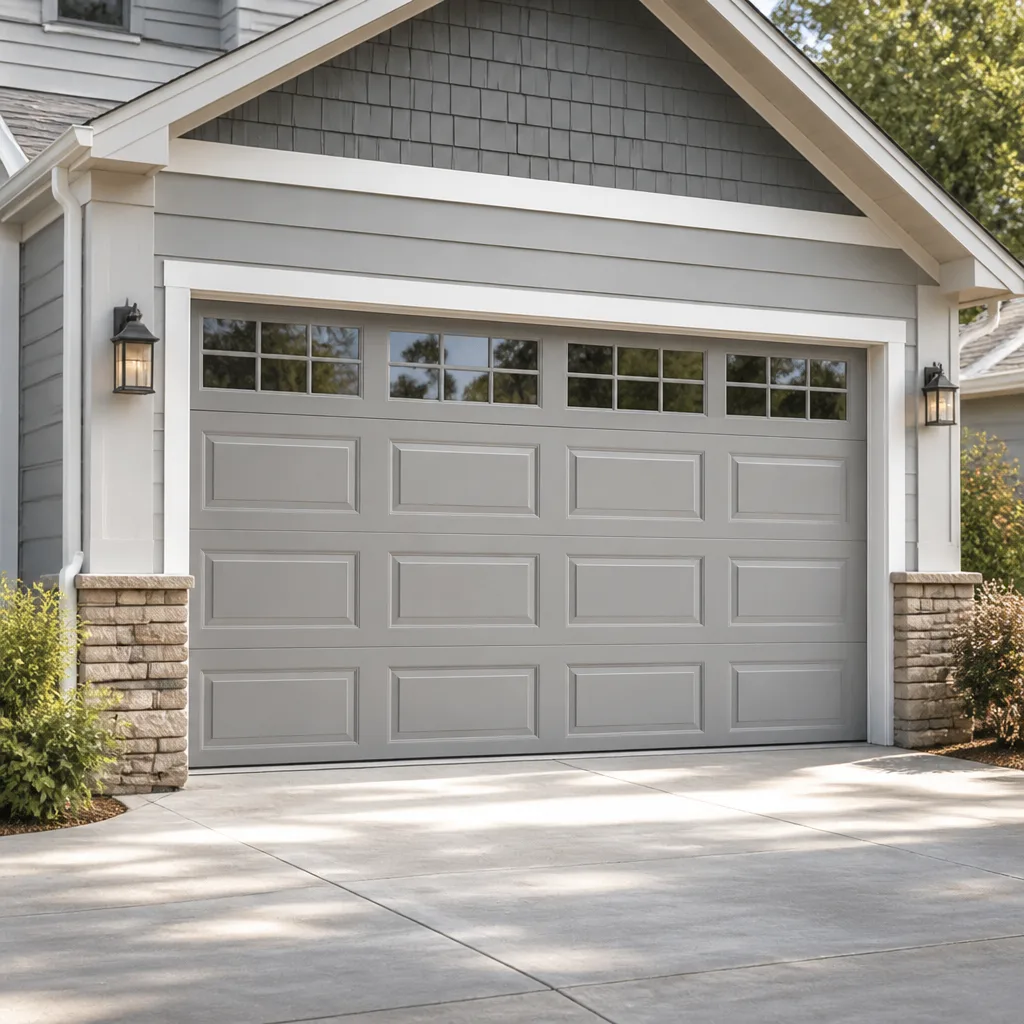 Raised-panel steel
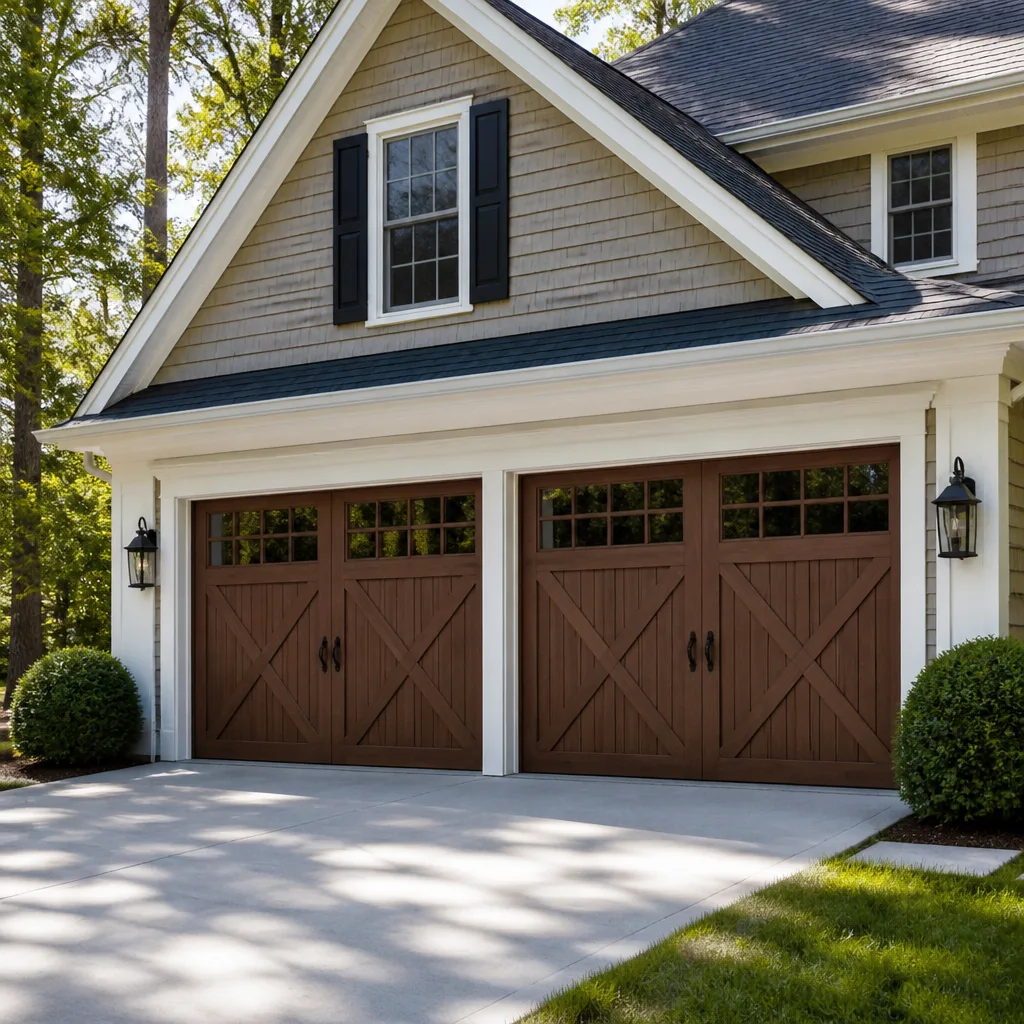 Carriage house
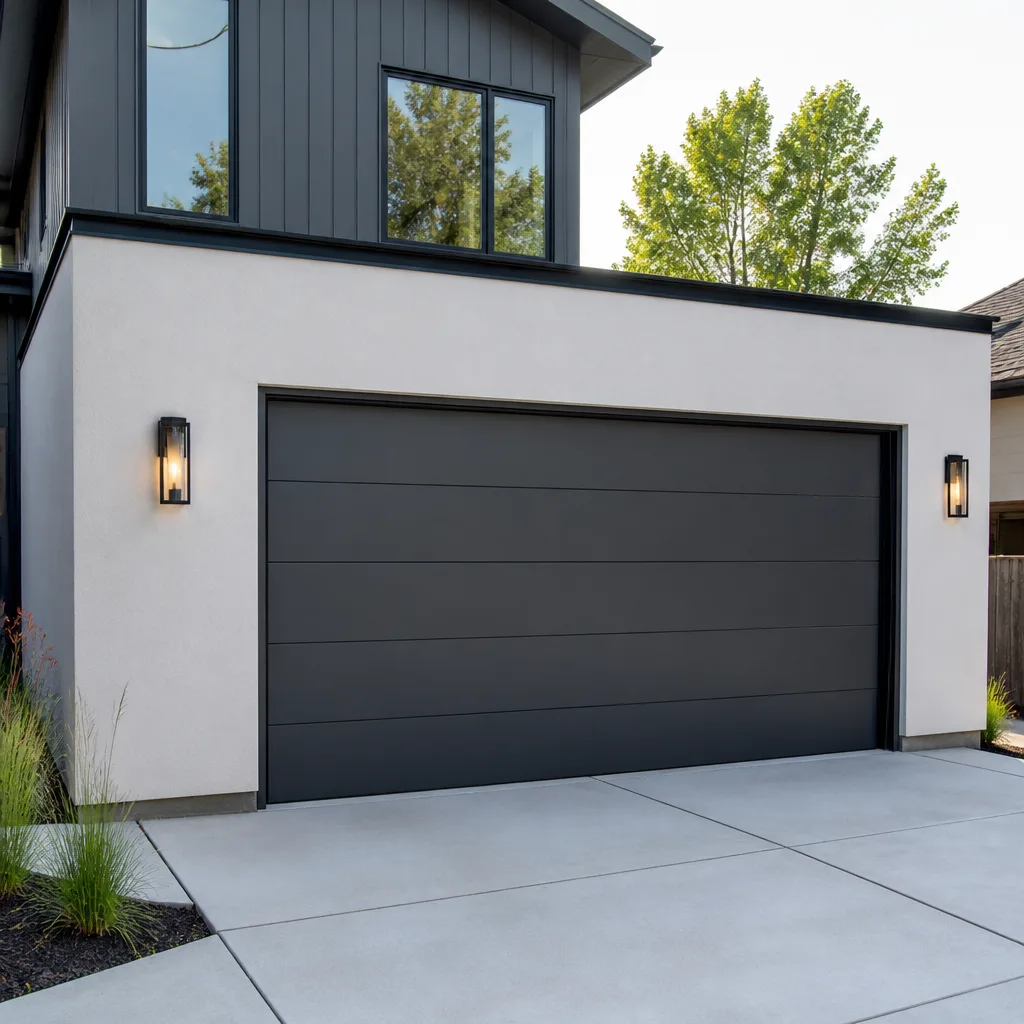 Modern flush
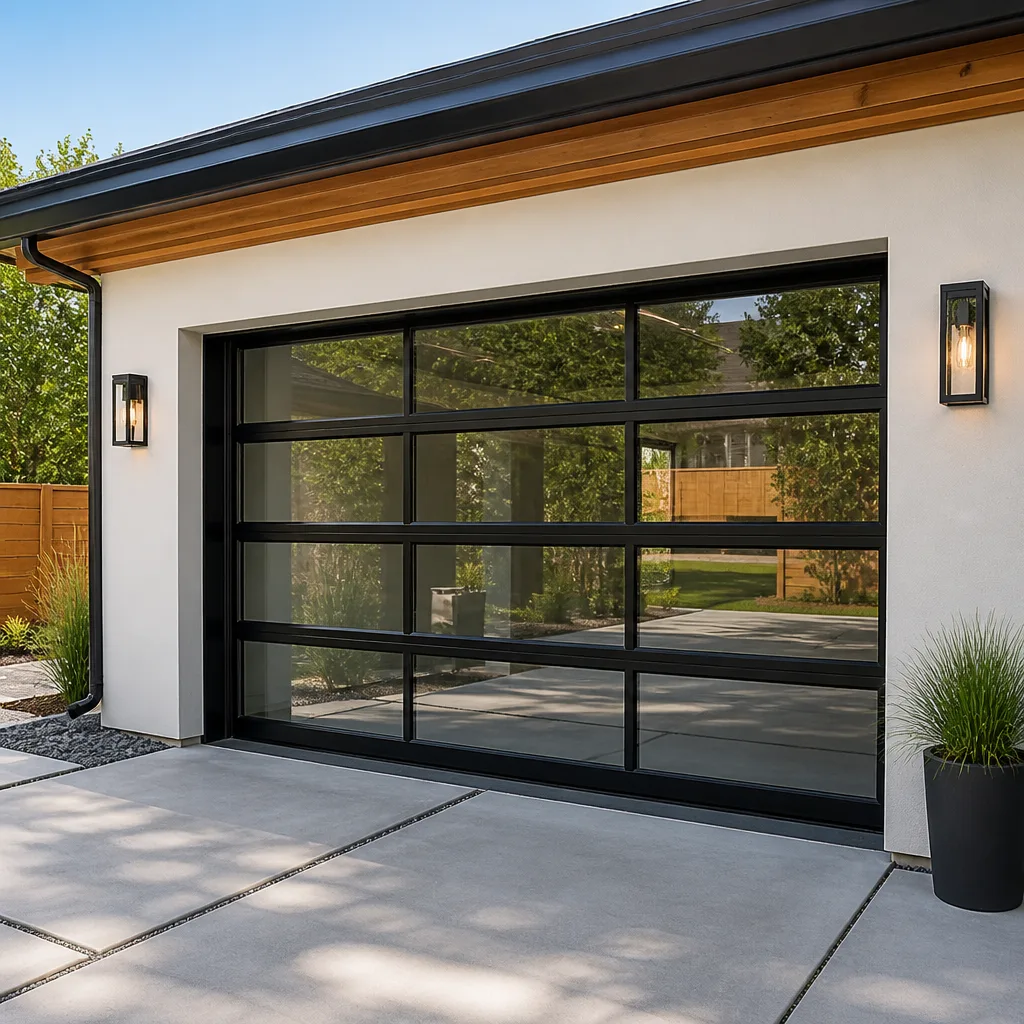 Full-view glass
 LiftMaster openers
 Chamberlain openers
Full 25-point door and opener safety check with every visit - springs, cables, rollers, tracks, and your LiftMaster or Chamberlain opener included
You get a price before we start. It does not change when the pro arrives.
Get your free estimateGarage Door Repair Maintenance Checklist for High Point Homeowners
Here’s the mistake we see most often: a homeowner lubricates the springs and hinges first because it feels productive, and only afterward glances at the springs for wear. That order is backwards. A fresh coat of lubricant on a torsion spring hides the fine cracks and dark spots that tell you a spring is close to failing. Mask the wear and you lose your early warning. The maintenance pass you did to protect the door is the one that kept you from noticing the part about to break. In this guide we lay out the correct sequence for a maintenance pass in High Point, then split the work cleanly into what you can handle yourself and what belongs with a technician. You’ll finish knowing exactly which tasks to own, which to hand off, and why the order matters as much as the tasks.
Quick Answer
A garage door maintenance checklist in High Point should run in one order: visual inspection first, then balance and safety-reverse testing, then lubrication, then a technician check of springs, cables and opener force settings. Homeowners can safely handle visual checks, the manual release test, lubrication with the right product for the local humidity swings, and cleaning the photo-eye lenses. Springs, cables, torsion hardware and opener force adjustment belong to a trained technician. Get the sequence right and you’ll catch most failures weeks before they strand your car.
Styles & brands we work with
- Raised-panel steel
- Carriage house
- Modern flush
- Full-view glass
- LiftMaster openers
- Chamberlain openers
Table of Contents
- Why the Order of a Maintenance Pass Matters
- The DIY vs. Technician Split
- Step 1: The Visual Inspection (Before Any Lubricant)
- Step 2: The Balance and Auto-Reverse Test
- Step 3: Lubrication for High Point’s Humidity and Cold Snaps
- Step 4: Opener Settings and Warranty-Safe Testing
- The High Point Seasonal Maintenance Calendar
- What a Passing Inspection Actually Looks Like
Why the Order of a Maintenance Pass Matters
A maintenance checklist lives or dies on sequence. Do the same tasks in the wrong order and you can quietly destroy the information the inspection was meant to give you. Lubricant over a worn bearing hides the grinding sound. A wiped-down track hides the metal shavings that tell you a roller is failing. Each task in a proper pass either gathers information or applies a fix. Inspection gathers. Lubrication and adjustment apply. If you apply before you gather, you’re working blind.
In High Point, the sequence matters more than in a lot of places because of how the seasons stress a door. A July afternoon with heavy humidity swells wood panels and thickens grease on the tracks. A January cold snap contracts metal and stiffens old lubricant until rollers drag. The same door behaves differently in each season. If you lubricate in July with the wrong product, a January morning can leave the door stiff and slow. Then it’s the cold that gets blamed, not the lubricant.
Here is the order we recommend for any maintenance pass, whether you’re doing the homeowner portion or a technician is on site:
- Visual inspection of springs, cables, rollers, tracks, panels and hinges.
- Balance test and manual release check.
- Auto-reverse and force-sensor test at the opener.
- Lubrication with the correct product.
- Hardware torque and roller check.
- Opener force and travel-limit adjustment (technician only).
Notice that lubrication sits fourth, not first. That single change prevents most of the misdiagnosis we run into on service calls around High Point. A homeowner who lubricates a spring that’s about to break has no warning left. A homeowner who inspects first sees the crack, calls us, and gets the spring replaced before it strands the car.
The DIY vs. Technician Split
Most checklists blur the line between “you can do this” and “call someone.” We won’t. Clear categories save you time and, more importantly, keep you away from the parts that can hurt you. Here is the split, with no ambiguity.
Tasks You Can Own
- Visual inspection of springs, cables, rollers and panels from the ground, without touching anything under tension.
- Manual release test using the red handle, with the door closed and no one underneath.
- Balance test lifting the door halfway by hand to see if it holds.
- Auto-reverse and force-sensor test at the opener, using the manufacturer’s instructions.
- Lubrication of hinges, rollers, tracks and the opener rail with a product suited to the season.
- Cleaning the photo-eye lenses and wiping down the tracks with a dry cloth.
- Tightening visible bolts on the hinges and brackets, using hand tools only.
Tasks That Belong to a Technician
- Torsion and extension springs – any inspection that requires touching or measuring them under tension.
- Cables – adjusting, replacing or even touching cables under load.
- Torsion tube, drums and bearing plates – anything under spring tension.
- Opener force and travel-limit adjustment – safely set only with a trained eye and the right tools.
- Track realignment after an impact or a door that’s jumped its rollers.
- Panel replacement following a dent or a strike.
Springs and cables are the most dangerous parts on the door. A torsion spring under load stores enough energy to cause serious injury in an instant. We won’t walk you through handling them, and any guide that does is giving you bad advice. Call a trained technician for anything that involves springs, cables or the torsion hardware. That’s not a sales pitch – it’s the only responsible answer.
Step 1: The Visual Inspection (Before Any Lubricant)
The first pass is all eyes, no hands. You’re looking for signs of wear before anything is cleaned, adjusted or greased. Work from the top of the door down so you don’t miss anything overhead. Stand back a few feet and look at the whole door first.
What to Look For
- Springs: a light film of rust is normal. Dark spots, fine cracks, or a visible gap in the coil mean the spring is failing. Note the location and call a technician – don’t touch it.
- Cables: frayed strands, kinks, or slack on one side but not the other. Slack where there should be tension is a red flag.
- Rollers: flat spots, chips, or rollers that look dry and cracked. Nylon rollers should be smooth, steel rollers free of rust.
- Hinges: loose screws, bent leaves, or rust at the pivot points.
- Tracks: dents, bends, debris, or anything that looks out of parallel with the door edge.
- Panels: dents, cracks, separating seams, or wood that’s swelled or warped from humidity.
- Weather seal: gaps at the bottom, a seal that’s torn or flattened, or daylight showing under the closed door.
High Point’s summer humidity is hard on wood-panel doors, particularly older Clopay and Wayne Dalton panels that have seen a few summers. Wood swells in July and shrinks in the dry weeks of fall. If you see a panel that’s starting to cup or separate, note it. That’s the kind of wear that doesn’t fix itself and gets worse with another season.
If the door won’t open at all, or if it opens partway and stalls, stop the inspection and call for garage door repair. A door that moves unevenly or stops mid-travel usually has a mechanical problem that an inspection can’t solve and a lubricant won’t fix. If the door opens fine but the opener is sluggish or the remote is unreliable, that’s an opener issue, and garage door opener repair is the right call.
Step 2: The Balance and Auto-Reverse Test
A door that’s out of balance is a door that’s working too hard every time it opens. The opener strains, the springs wear faster, and the whole system ages ahead of schedule. The balance test takes under a minute and tells you whether the door is operating under its own weight or fighting the hardware.
How to Run the Balance Test
- Close the door fully and pull the manual release handle to disconnect the opener. The door should now move freely by hand.
- Lift the door to about waist height and let go. It should stay roughly where you left it.
- If it drops, the springs are under-tensioned. If it rises, they’re over-tensioned. Either way, the springs need a technician.
- Lower the door gently back to closed, then re-engage the opener by raising the door until you hear the trolley click back in.
Don’t try to adjust spring tension yourself to fix a balance issue. That adjustment is exactly what makes a torsion spring so dangerous. Note what you saw and pass it to a technician.
The Auto-Reverse Test
The auto-reverse function is the safety feature that stops and reverses the door when it meets an obstruction. Test it once a month. With the door open, place a piece of wood or a roll of paper towels flat on the floor under the door. Press the wall button to close it. The door should reverse when it contacts the object. If it doesn’t, the opener needs service before the door is used again. The photo-eye sensors are a separate system – a small beam across the door opening that stops the door if it’s broken. Wipe the lenses with a soft cloth and make sure nothing blocks the beam. If the opener ignores the sensors or reverses for no visible reason, garage door opener repair covers that diagnosis.
Step 3: Lubrication for High Point’s Humidity and Cold Snaps
Lubricant choice is where climate ruins a perfectly good maintenance pass. A thin oil that flows nicely in July can turn to a sticky film by January, and a thick grease that feels right on a cold day can attract grit and gum up the works in humid summer weather. High Point sees both – muggy summers and the occasional hard cold snap in winter – so the product has to work across a wide range.
For most doors, a silicone-based or white lithium lubricant is the right choice. Both handle the temperature swing without turning sticky. Stay away from thick greases, and stay away from WD-40 as a general-purpose door lubricant – it’s a light solvent, not a lasting lubricant. It cleans well and then evaporates.
Where to Lubricate
- Hinges: one short spray at each pivot point.
- Rollers: a small amount on the bearing, not the wheel surface.
- Track interior: a thin wipe along the inside curve, not a heavy spray.
- Opener rail: a light application along the rail if the manufacturer calls for it. Check the manual for Genie and LiftMaster openers, since the guidance varies.
- Lock and springs: a light spray on the lock mechanism. Springs can get a light dry-film lubricant, but check for cracks first – that’s why lubrication comes after the inspection.
Don’t spray the photo-eye lenses, and don’t lubricate the belt or chain on the opener. Both attract dust. In High Point, the summer pollen and the fall leaf debris get into everything, so a clean track is more important than a heavily greased one. A dry cloth wipe goes further than a can of lubricant on a track full of grit.
Step 4: Opener Settings and Warranty-Safe Testing
Opener force and travel-limit settings are the two adjustments most homeowners should avoid making, but you can and should test them. Testing tells you whether the opener is set correctly. Adjusting tells you where to set it. One is safe, the other can shorten the life of the motor or disable the safety features. The difference matters for your warranty, too.
Testing Without Adjusting
- Run the auto-reverse test with a small object on the floor, then again with your hand (without pressure) against the door’s bottom edge. The door should reverse on contact both times.
- Watch the door as it closes. It should meet the floor without straining or slamming.
- Watch the door as it opens. It should stop level with the header without pushing against the stops.
- Listen for grinding, clicking, or a motor that sounds like it’s working against resistance.
If the door slams, strains, reverses without contact, or stops short of fully open, the opener’s force or travel limits need a technician. Adjusting them without experience can disable the safety reverse – the exact feature that prevents a door from crushing something in its path. It can also void the warranty on higher-end openers. Rather than dig into the settings yourself, call for a technician check. We work on Genie, LiftMaster, Chamberlain, Craftsman and Raynor systems, so the settings get read correctly the first time.
For smart-home openers with a companion app, most major brands log force and travel data you can check. The app tells you if the opener is struggling without you needing to touch any settings. That’s the safest way to catch a developing problem before it becomes a repair. If a smart opener reports repeated force-limit events, that’s the signal to book a technician visit rather than ignore it.
The High Point Seasonal Maintenance Calendar
A checklist isn’t a one-time job. The right rhythm matches how the local climate stresses the door in each season. High Point doesn’t see the extremes of the mountains or the coast, but the swings between humid summer and cold snaps are enough to work the hardware and the opener over the course of a year.
Spring
Clean the winter grit off the tracks and wipe down the photo-eye lenses. Spring rains also mean checking the bottom seal for gaps – a swollen wood panel or a torn seal lets water in and speeds up panel rot. This is a good time for the full visual inspection, since the door has just come off the cold season.
Summer
Humidity is the big issue. Check that wood-panel doors (particularly older Amarr or Clopay panels) haven’t swelled. Run the balance test – loosened hardware from a winter of use shows up here. Light lubrication with a silicone product before the muggy weeks pays off.
Fall
Clear leaves and debris from the tracks and the area around the door opening. Leaves packed into the track bind the rollers and strain the opener. This is also the best time for a technician check before the heating season, since door hardware that shifts with the first cold snap is easier to catch early.
Winter
Cold snaps stiffen old lubricant and shrink metal. Watch for a door that opens slowly in the morning. Cold-weather stiffness is often a sign that the lubricant is too thick or that the spring tension is changing as the metal contracts. If the door struggles in the cold, that’s the moment to investigate before a spring fails when it’s least convenient.
What a Passing Inspection Actually Looks Like
The hardest part of a maintenance checklist is knowing what “good” looks like. A door that opens and closes without obvious drama isn’t necessarily healthy. Here’s how we judge a door that’s actually in good shape versus one that’s one cycle away from a failure.
A Door That Passes
- Moves with a smooth, even sound from open to close and back. No grinding, popping or clicking.
- Holds position when released at waist height – no drift up or down.
- Reverses immediately on contact with a small object during the auto-reverse test.
- Shows springs with a light, even coating of rust but no dark spots or visible gaps.
- Rollers turn smoothly without flat spots or roughness.
- Bottom seal sits flat against the floor with no gaps at the corners.
- Opener runs without straining and stops the door level at both ends of travel.
A Door One Cycle Away From Failure
- Opens or closes slowly in one direction but not the other.
- Stops partway up or down and needs a second press to finish.
- Springs show dark spots, fine cracks or an uneven coil.
- One cable is visibly slack while the other is under load.
- Rollers that have flat spots, or a door that rattles in its tracks.
- The opener reverses on contact with the floor even when nothing is in the way.
If any of the failure signals show up, that’s the moment to call, not the moment to try another round of lubrication. The door that stalls but still opens is the one that strands you six weeks later. On a service call, we look at the same signals a homeowner can see, plus the ones that require a trained eye. Our technicians have up to 15 years of experience reading those signs, and we’ve worked across every major brand – LiftMaster, Chamberlain, Genie, Clopay, Amarr, Wayne Dalton, Craftsman and Raynor – so no door gets a guessing game.
Common Mistakes to Avoid
- Lubricating before inspecting. A coat of lubricant hides the cracks and dark wear spots that reveal a failing spring. Inspect clean hardware first, then lubricate.
- Using WD-40 as a lubricant. It’s a light solvent and helps with a quick fix, but it doesn’t last. Use a silicone or white lithium product intended for a garage door.
- Trying to adjust spring tension to fix a balance issue. Springs are under extreme tension and can cause serious injury. Let a technician handle them.
- Ignoring a slow-opening door in the winter. Cold-weather stiffness is often a warning of a spring about to fail. Investigate before it strands you.
- Adjusting the opener’s force or travel limits without reading the manual. A misadjusted opener can disable the safety reverse, which is a warranty and safety issue for Genie and Chamberlain units.
- Cleaning the tracks with a solvent. Solvents strip the factory finish and attract grit. Wipe with a dry cloth and use a light lubricant only.
- Skipping the auto-reverse test after servicing. A door that opens and closes quietly can still fail the safety test. Run it every time.
The mistake we see most in High Point is lubrication before inspection. It’s the reason we open every guide with it. Get that order right and half the other mistakes never come up.
See the difference
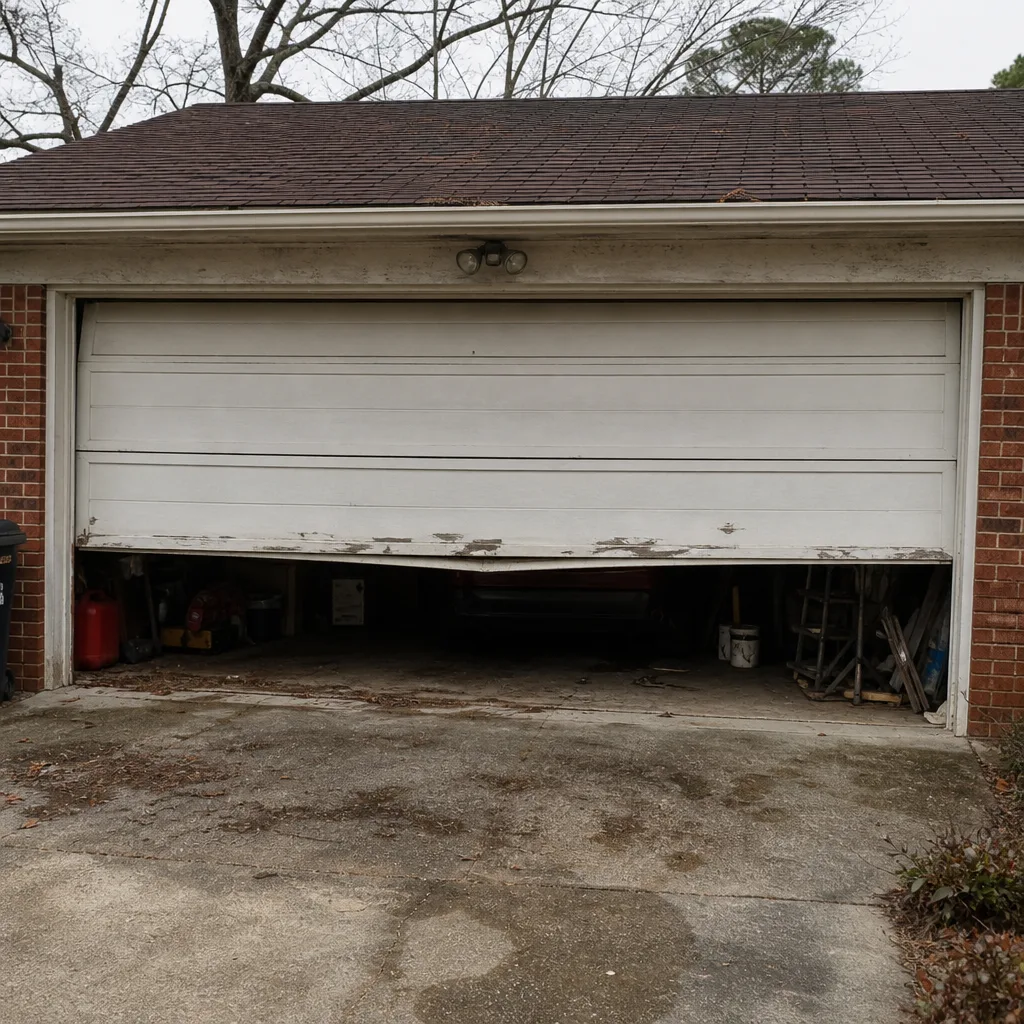 Before
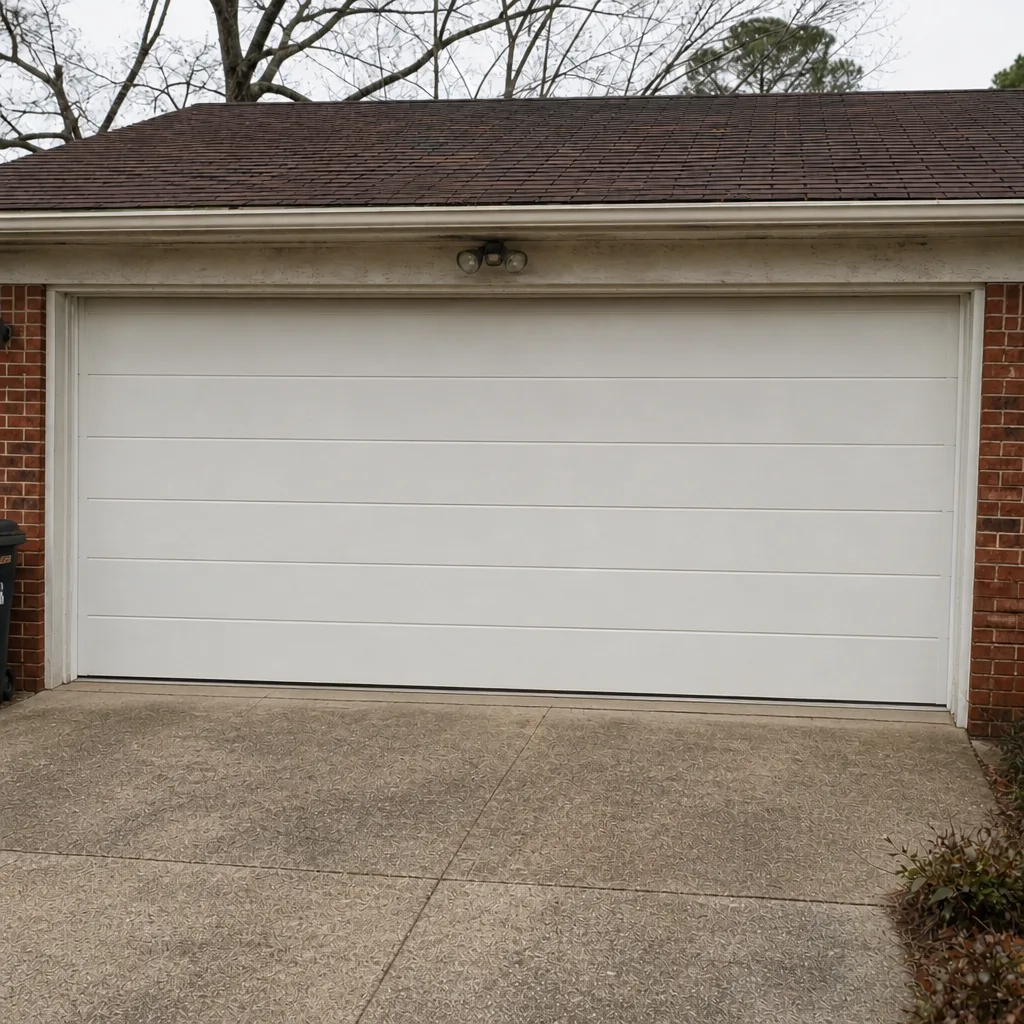 After
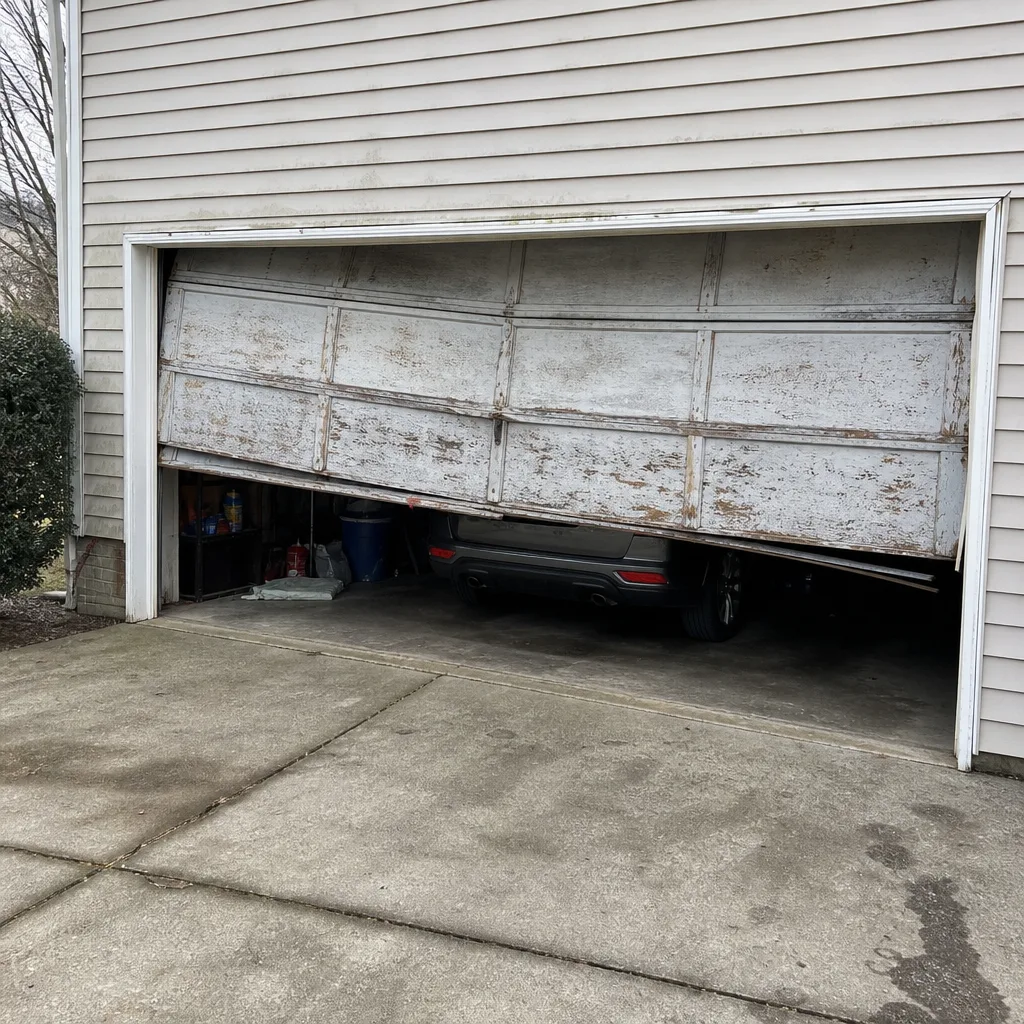 Before
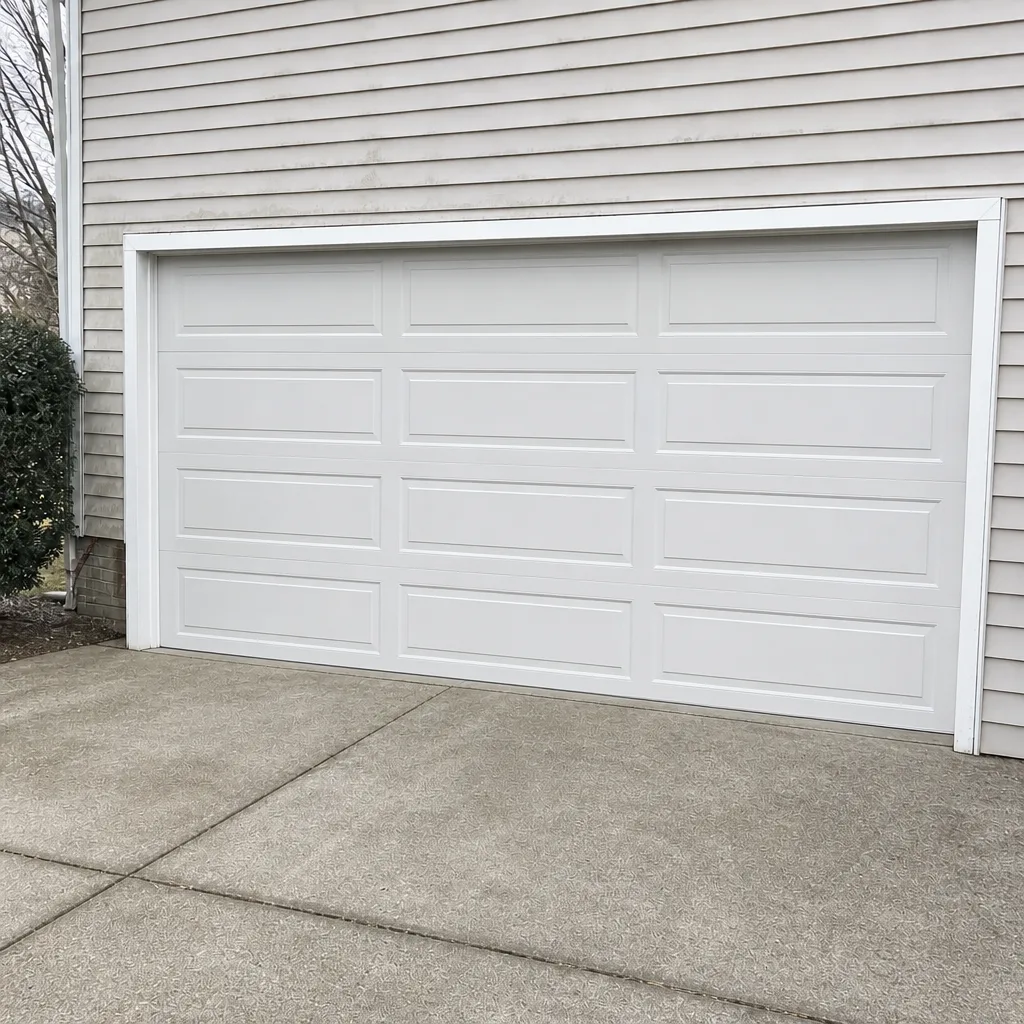 After
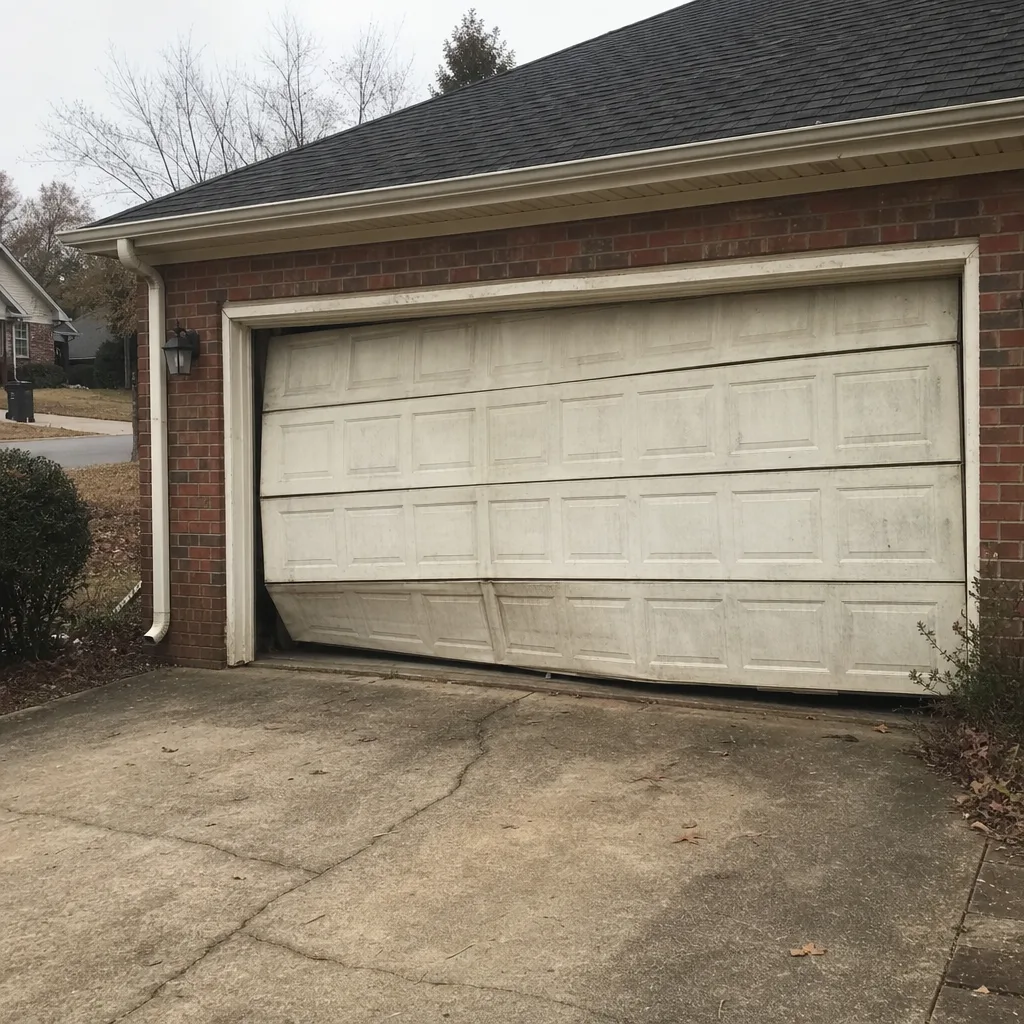 Before
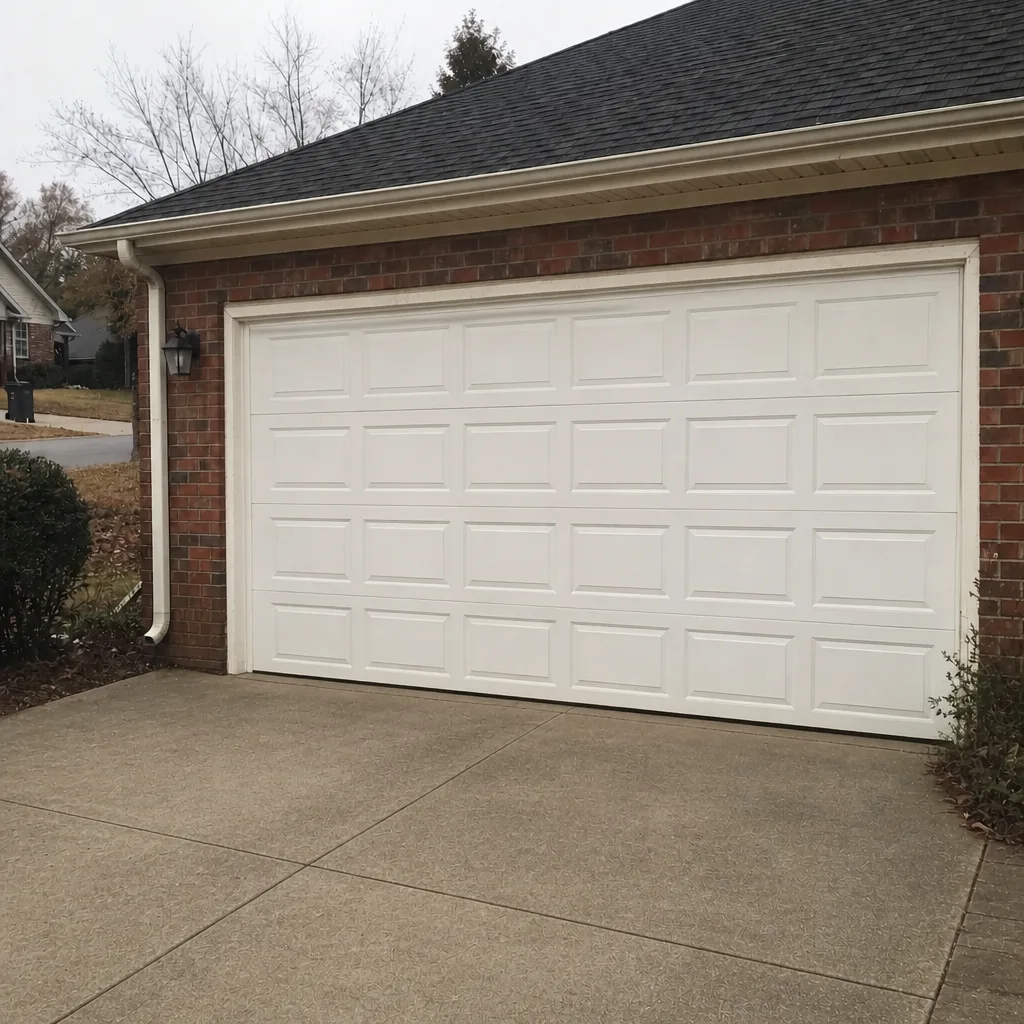 After
When to Call a Professional
Some maintenance tasks fit in a Saturday morning. Others shouldn’t be handled by a homeowner at all. Call a professional when a spring shows visible cracks or dark spots, when a cable is slack or frayed, when the door fails the balance test, or when the opener reverses without contact. Those signals mean a component is worn or a safety setting is wrong, and neither is safe to leave. If the door has come off its tracks, stopped partway and won’t move, or dropped suddenly with the opener running, stop using it and call. Those are the situations where a door can come down hard. Arrow Garage Door Service offers free estimates in High Point and works on every major brand, from Clopay panels to LiftMaster openers. Call (833) 842-1974 for a free estimate. We answer 24/7. Fast dispatch from 7am to 7pm, Sunday through Friday. The price is quoted and agreed before any work starts, so you know what you’re paying before we begin.
Frequently Asked Questions
Every three months for the homeowner portion, and once a year for a technician check of the springs, cables and opener settings. High Point’s humidity swings mean the summer and the first cold snap are the two most important checks. Wipe the tracks and test the auto-reverse monthly if your door runs several times a day. Call (833) 842-1974 for a free estimate if a technician check turns up anything.
You can apply a light dry-film lubricant to the springs, but only after a visual inspection and only if there are no visible cracks or dark spots. A spring that’s showing wear needs a technician, not lubricant. If you’re unsure what you’re looking at, skip the springs entirely and call a professional. Touching a failing torsion spring is dangerous, and no amount of caution replaces a trained eye. Call (833) 842-1974 and we’ll take a look.
Cold air stiffens old lubricant and shrinks the metal parts. A door that opens slowly in the cold usually needs a lighter lubricant or has a spring that’s losing tension. If the door is slow but still opening, check the lubricant first. If it’s inconsistent or the door stalls, it’s a spring or opener issue and deserves a technician visit. Call (833) 842-1974 for a free estimate.
Test them yourself, don’t adjust them. Testing the auto-reverse and watching for strain tells you if the opener is set correctly. Adjusting force or travel limits without experience can disable the safety reverse, which is a warranty and safety issue. If the opener needs adjustment, a technician should make it. Call (833) 842-1974 and we’ll check the settings on any brand, from Genie to LiftMaster.
The most common problem we see is worn springs – torsion springs on most doors, extension springs on older models. Humidity and daily use both work the springs over time. A close second is opener force settings that have drifted from correct. Both show up as doors that open slowly, stall partway or fail the auto-reverse test. Call (833) 842-1974 for a free estimate.
You can do roughly half of it safely. The homeowner portion covers visual inspection, the balance test, auto-reverse testing, lubrication with the right product and cleaning. The technician portion covers anything touching springs, cables, torsion hardware and opener force adjustment. Those are the parts that can hurt you or disable a safety feature. Call (833) 842-1974 if you’re unsure which side a task falls on.
The Bottom Line
Garage door maintenance is a sequence, not a checklist of disconnected tasks. Inspect first, then test balance and auto-reverse, then lubricate with a product built for High Point’s humidity and cold snaps. The homeowner portion – visual checks, the balance test, sensor cleaning, lubrication – catches most developing problems early. The technician portion – springs, cables, torsion hardware, opener force settings – keeps the dangerous parts safe. Get the order right and you’ll prevent most of the surprise failures that cost more to fix than they would have to maintain. If any failure signal shows up, don’t reach for the lubricant. Reach for the phone.
Arrow Garage Door Service is garage doors and garage door openers, nothing else. That focused scope means every job, every brand, every opener type gets the right diagnosis the first time. Whether you’re due for a maintenance check or your door has stopped working, call (833) 842-1974 for a free estimate. We answer 24/7. Fast dispatch from 7am to 7pm, Sunday through Friday, and the price is quoted and agreed before any work starts.
Written by the team at Arrow Garage Door Service.