
Last updated November 15, 2026
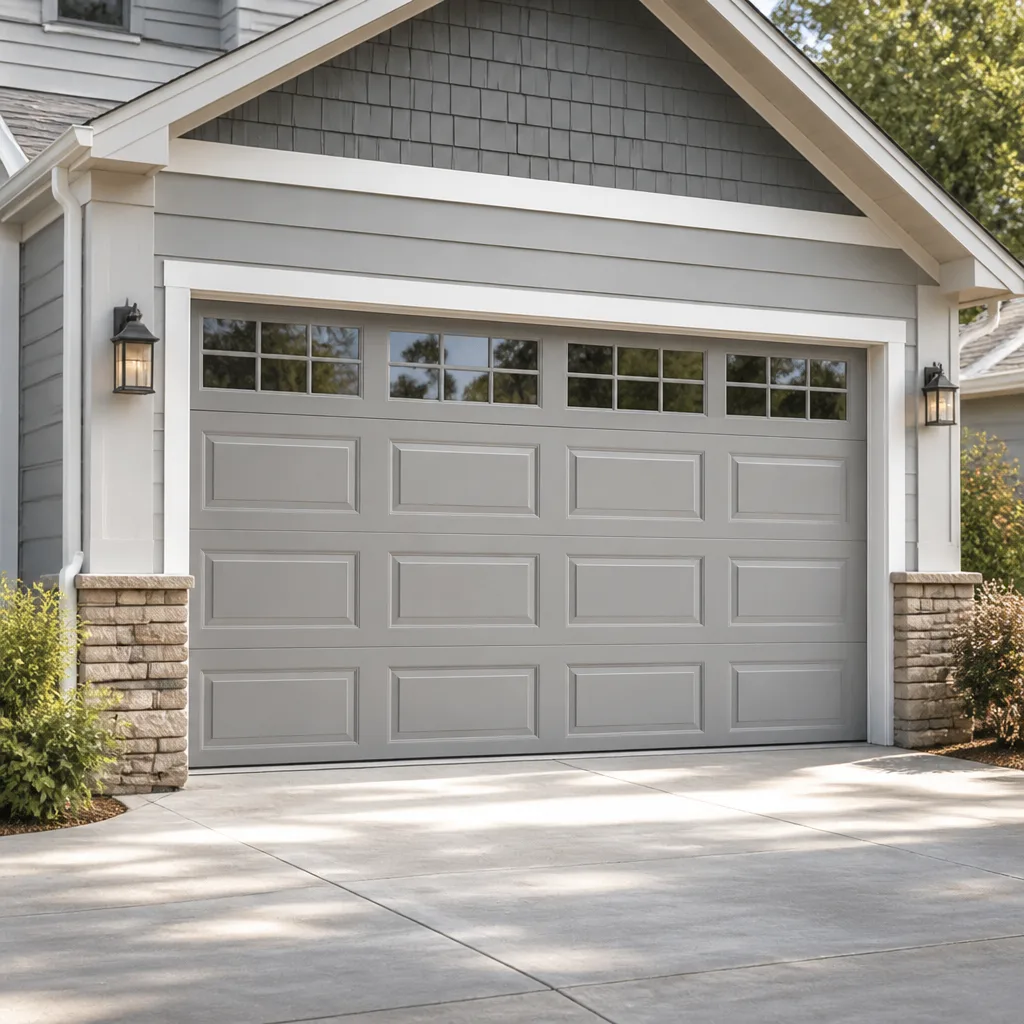 Raised-panel steel
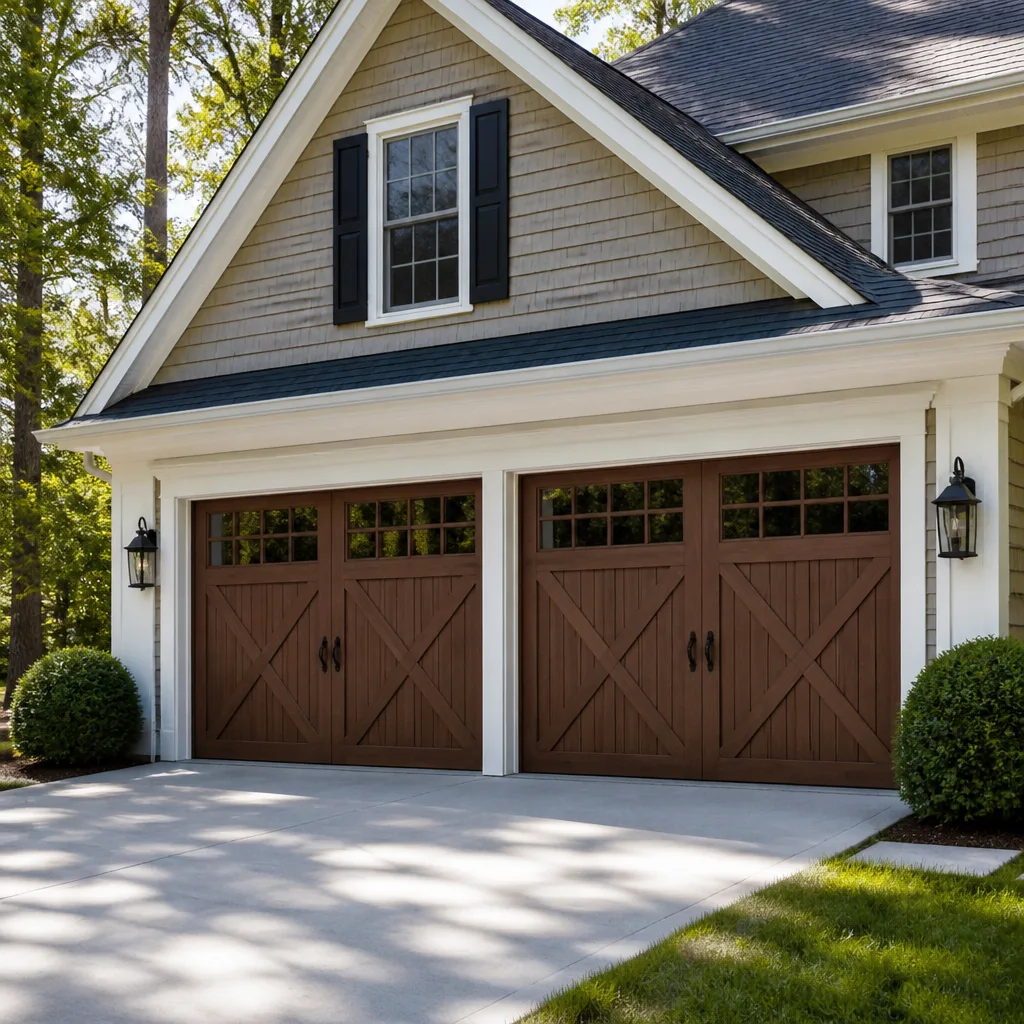 Carriage house
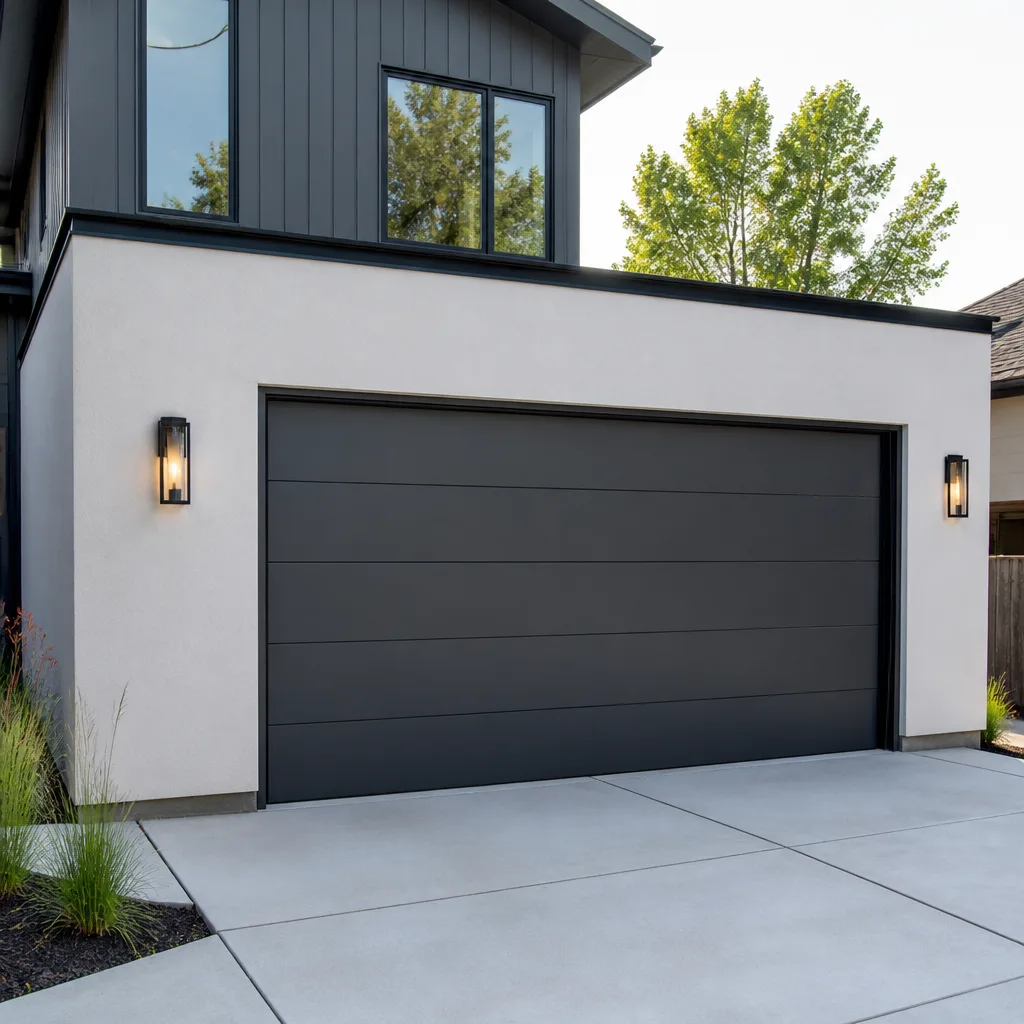 Modern flush
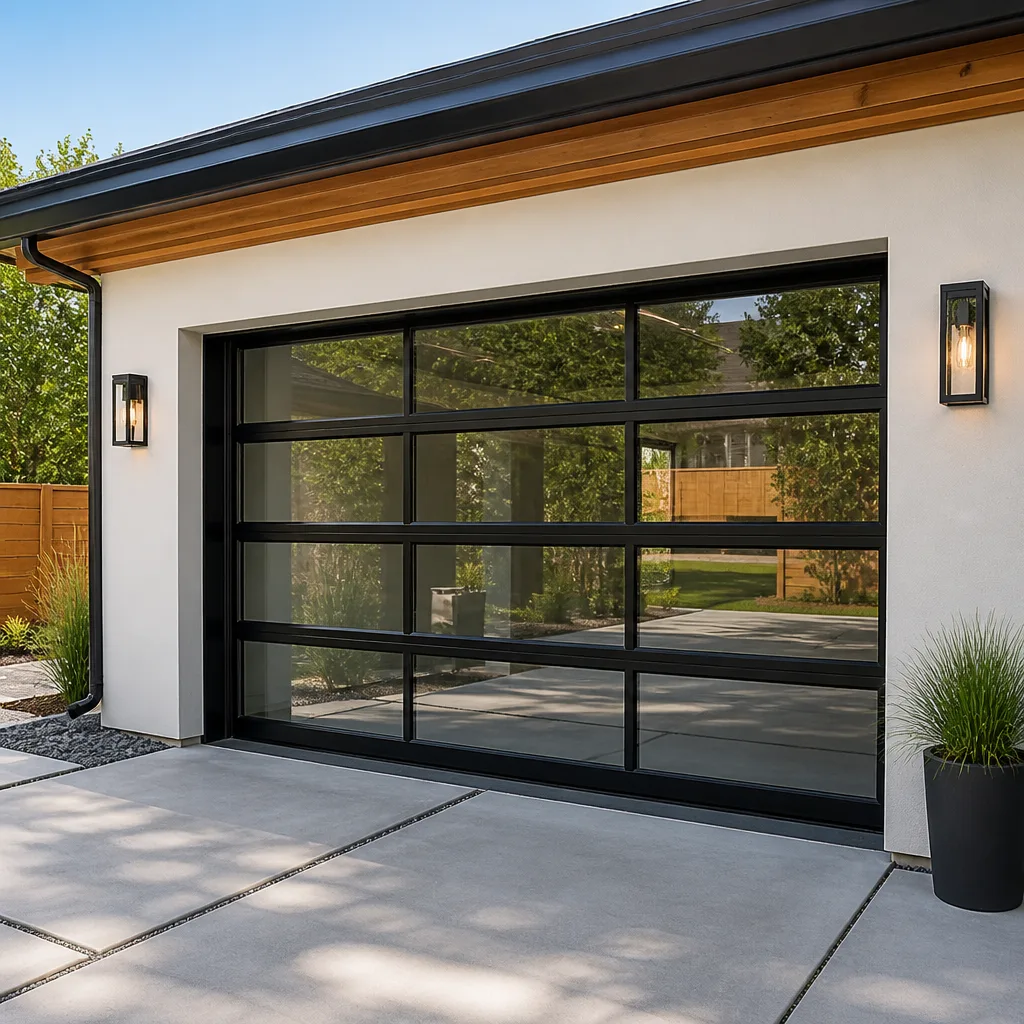 Full-view glass
 LiftMaster openers
 Chamberlain openers
Full 25-point door and opener safety check with every visit - springs, cables, rollers, tracks, and your LiftMaster or Chamberlain opener included
You get a price before we start. It does not change when the pro arrives.
Get your free estimateGarage Door Repair Maintenance Schedule: What to Do and When
Lubricating your garage door once a year feels productive, but if you’re using the wrong product on the wrong part, you’re accelerating wear while checking a box. We’ve seen doors where a yearly spray of WD-40 on the rollers did more damage than doing nothing at all. That’s because a garage door is not one machine. It’s several systems – springs, rollers, hinges, tracks, cables, and an opener – and each one ages on its own clock and needs its own care. A maintenance schedule built around calendar dates won’t tell you when a spring is close to its cycle limit or when a wood panel is soaking up High Point humidity. This guide is organized around what failure you’re preventing and how your door actually wears, so you’ll know exactly what to do, when, and why it matters.
Quick Answer
A working garage door maintenance schedule combines monthly visual checks, lubrication every six months, seasonal adjustments tied to High Point’s humid summers and cold snaps, and a professional inspection once a year or whenever you hear a new noise. Springs are the part most people ignore and the part most likely to strand you – a standard torsion spring lasts about 10,000 cycles, which for many households is a few years, not forever. Do the small checks yourself, but leave springs, cables, and anything under tension to a trained technician.
Styles & brands we work with
- Raised-panel steel
- Carriage house
- Modern flush
- Full-view glass
- LiftMaster openers
- Chamberlain openers
Table of Contents
- Why Most Garage Door Maintenance Schedules Fail
- The 5-Point Monthly Self-Inspection (Under 10 Minutes)
- Lubrication Done Right: The Correct Product for Every Part
- Spring Lifespan Math: Where Does Your Door Stand?
- Seasonal Adjustments for High Point’s Climate
- The Annual Professional Inspection: What It Covers
- Opener and Safety-Reverse Care
- What Each Skipped Task Costs You Later
Why Most Garage Door Maintenance Schedules Fail
Most published checklists are activity lists, not outcome lists. They tell you to lubricate, tighten, and inspect, but they don’t tell you what breaks if you skip a step, so there’s no way to prioritize. That’s how doors end up with brand-new lubricant on stripped nylon rollers and a squeaky hinge nobody addressed.
A schedule that actually works is built around failure modes. Ask what could fail, how likely it is, and what that failure costs. That reframing changes the order of work. Here’s how we think about it at Arrow Garage Door Service, where garage doors are all we do:
- Springs and cables are the highest-consequence failures. A snapped spring leaves the door dead in the tracks and can’t be safely ignored. Cables under tension are dangerous to touch and should never be a DIY item.
- Rollers and hinges wear slowly and announce themselves with noise. Caught early they’re a small job; ignored, they grind the track and wear the opener.
- Tracks go out of alignment from a bump or from settling, and a bent track can drop a door off its rollers.
- Weather seals and bottom rubber fail quietly, letting in water, pests, and High Point’s summer humidity.
- The opener is electronics, and most opener failures trace back to a door that’s been fighting it – a stiff roller or a sagging hinge that makes the motor work harder.
Notice that the calendar barely enters into it. Your door’s real clock is usage and condition. A household that opens the door six times a day wears its springs three times faster than a household that opens it twice. That’s the logic behind everything below.
The 5-Point Monthly Self-Inspection (Under 10 Minutes)
This inspection isn’t repair – it’s a developing-problem detector. Running these five checks once a month catches most issues while they’re still small and inexpensive. You don’t need tools beyond your eyes and ears.
- Listen. Open and close the door and stand still. Grinding, squealing, popping, or a rhythmic thump each point at a specific worn part. A sudden new noise is the single best early warning a door gives you.
- Watch the travel. Does the door move smoothly up and down, or does it jerk, hesitate, or drift to one side? A door that travels crooked is fighting a bent track or a worn roller.
- Check the balance by hand. Disconnect the opener using the release cord and lift the door halfway. A balanced door stays put; a door that slams down or drifts up has a spring or tension problem – stop here and call a technician rather than adjusting the spring yourself.
- Look at the hardware. Scan the rollers, hinges, and track for rust, cracks, missing screws, or pieces sitting loose. Let your eyes follow the track from floor to ceiling and back.
- Test the safety reverse. With the door connected to the opener, place a roll of paper towels or a piece of wood in the door’s path and close it. The door should reverse on contact. If it doesn’t, that opener needs attention before anyone stands under the door.
Five minutes of listening and watching each month, and you’ll catch bearing noise, a loose track bolt, or a failing safety reverse long before they cause a failed door. We’d rather hear from you about a squeak than about a door hanging off a cable. If a check turns up something you don’t want to put your hands on, an inspection from a garage door repair technician settles it in one visit.
Lubrication Done Right: The Correct Product for Every Part
Here’s the part where good intentions backfire. Most garage door “maintenance” is a can of WD-40 sprayed on rollers, and that specific habit is one of the most common causes of premature roller failure. WD-40 is a solvent and light penetrant, not a lubricant. On roller bearings it strips what little lubricant is left and leaves the metal dry. On nylon rollers it does nothing useful at all.
What belongs where depends on the material:
- Steel rollers with bearings: a lithium grease or dedicated garage door grease. It stays in place, resists being thrown off, and protects the bearing that does the actual work.
- Nylon rollers: a light silicone spray. Grease on nylon attracts grit, and grit grinds nylon. Keep it clean and lightly siliconed, or leave it alone.
- Hinges, pivot points, and the opener rail: a dry lubricant or a small amount of lithium grease on the metal pivot pins. Anything that gets sticky collects dust.
- The torsion spring: many springs arrive oiled from the manufacturer; a light wipe is enough. Don’t soak it – you’re not protecting against rust, you’re reducing coil friction.
- Tracks: nothing. Tracks should be clean and dry. Lubricant on a track collects dirt and turns the rail into a paste, which drags on the rollers.
The right rhythm is lubrication every six months, and a clean, dry wipe-down at the same time. If you remember one rule from this section, make it this: dry lube for dry metal, light silicone for nylon, greasy products away from tracks. Your rollers are the part the opener and springs are both working against, so treating them right saves wear everywhere upstream.
Spring Lifespan Math: Where Does Your Door Stand?
Standard torsion springs are rated for about 10,000 cycles. A cycle is one open and one close. So 10,000 cycles is roughly 5,000 full open-and-close events – but most households open in the morning and close at night, and each of those is two cycles. That’s how a spring reaches its rating faster than people expect.
Do the arithmetic honestly for your household:
- Count how many times the door goes up and down on an ordinary day. A two-car household using the main door for every departure and return can easily hit 6 to 10 cycles a day.
- Multiply by 365 to get your cycles per year. At 8 cycles a day, that’s about 2,900 cycles a year.
- Divide 10,000 by your annual number. At 2,900 cycles a year, you’re looking at roughly three and a half years before the spring reaches its rated life.
A quieter household that uses one door for arrival and departure and a second door rarely might see a spring last well past a decade. A busy family with kids coming and going can wear out a spring in a handful of years. The honest conclusion: a spring doesn’t last a fixed number of years – it lasts a fixed number of cycles, and how you use the door determines how fast you spend them.
We put the math in front of you because it changes the decision. If your spring is within a year or two of its rated cycles, replacing it before it snaps is a planned repair you control. Waiting means it breaks on its own schedule, often with the car inside. Springs are under extreme tension and can cause serious injury – never attempt to adjust, remove, or replace one yourself. That’s a job for a trained technician, full stop.
Seasonal Adjustments for High Point’s Climate
High Point gets hot, humid summers and winter cold snaps, and a garage door feels both. Wood panels absorb moisture when the air is heavy and dry out when it isn’t, and metal parts move a little with temperature. That’s why a purely calendar-based schedule misses things – the adjustment that matters depends on the season and the material.
Before summer’s humidity: check wood doors for swelling at the panel seams and around the bottom edge. Swelling panels bind in the frame and make the opener work harder. A coat of exterior-grade finish on a Clopay or Amarr wood door before the wet season does more for lifespan than any lubricant. Check weather seals too – a failed seal lets humid air into the garage all summer.
Before the first cold snap: do a tension and hardware check. Cold shrinks metal, and a door that ran fine in October can develop a new rattle or a slightly lazy lift in January. Listen for a new pop on the first cold morning and take it seriously. The pre-winter check is the one most homeowners skip, and it’s the one that catches a spring on its last legs before a cold-weather failure.
Year-round: keep the tracks clean and dry. Humid air plus metal tracks plus summer dust is how you get rust on rollers. If you haven’t seen what humidity does to a neglected door, that’s part of why we recommend a professional inspection every year. A High Point garage door lives outdoors without a roof, so treat it like the exterior part it is.
The Annual Professional Inspection: What It Covers
There’s a limit to what you can see from the ground, and several items on a proper inspection shouldn’t be touched by anyone without training. A full inspection once a year covers the parts that matter most and can’t be safely checked at home:
- Spring tension and cycle wear, including whether both springs on a matched pair are wearing evenly
- Cable condition, including fraying and the drum windings
- Track alignment and plumb, checking for sag or a bend from a bump
- Roller condition, bearing noise, and whether nylon rollers have been greased by mistake
- Hinge wear and any loose fasteners along the panel seams
- Opener force settings, limit switches, and the safety-reverse test
- Weather stripping and bottom rubber that are letting in water, pests, or humid air
We work on all eight of the major brands – LiftMaster, Chamberlain, Genie, Clopay, Amarr, Wayne Dalton, Craftsman, and Raynor – so an inspection doesn’t stop at “that’s not one we handle.” If it’s an opener problem rather than a door problem, we can look at it in the same visit; opener electronics are a separate service for us, and knowing both sides of the system means fewer return trips. Our technicians have up to 15 years of experience across those brands. One visit a year, timed before the season that stresses your door most, is the backbone of the schedule.
Opener and Safety-Reverse Care
Your opener is the part of the system most likely to be blamed for a problem the door caused. When a door lifts hard because of a stiff roller or a worn hinge, the opener compensates by working harder, and over time the strain shows up as a stripped gear, a burned-out motor, or a circuit board failure. Keep the door’s mechanicals healthy and the opener’s job gets easier.
What to do for the opener on a routine basis:
- Test the safety reverse every month, using an obstacle in the door’s path. If the door doesn’t reverse on contact, stop using it until a technician checks the opener.
- Check the force settings once a year. A door that needs a high force setting to close is telling you something is binding, and the fix belongs on the door, not the opener.
- Keep the opener rail lubricated with the right dry lube, not grease, and inspect the belt or chain for slack.
- Clear the photo-eye lenses of dust and check they line up. A misaligned lens is the most common cause of a door that won’t close.
A Genie or LiftMaster opener that’s cared for this way will outlast one that fights a stiff door every day. If yours is already misbehaving, the electronics side is its own specialty – a garage door opener repair visit can tell you whether the opener, the door, or both need work.
What Each Skipped Task Costs You Later
The reason to follow a schedule is that the cheap tasks prevent the expensive ones. Here’s how the math lines up, task by task:
- Skipping lubrication: worn rollers and bearings turn into a roller replacement, plus the extra opener strain that comes with it. Six months of a light silicone or lithium touch prevents it.
- Skipping the monthly listen: a noisy bearing goes unheard for months and takes a hinge or a track bolt with it. The listen costs nothing.
- Skipping the pre-winter check: a spring reaches its cycle limit in cold weather against a stiff door. Planned spring replacement is a routine repair; a broken spring with the car inside is a stranded morning.
- Skipping the pre-summer seal check: a failed seal lets humidity into a wood door, and swollen panels bind and crack. A seal is a small job; panel replacement is not.
- Skipping the annual inspection: minor track misalignment becomes a door off its rollers, and a frayed cable becomes a safety hazard. The inspection is where all of this gets caught early.
None of these failures are mysteries. They’re predictable wear that a small amount of attention redirects. Your garage door isn’t fragile – it just doesn’t tell you when it’s about to fail, unless you’re listening.
Common Mistakes to Avoid
- Spraying WD-40 on rollers. It’s a solvent, not a lubricant, and it strips the bearing while looking like maintenance. Use lithium grease on steel rollers and light silicone on nylon.
- Greasing the tracks. A lubricated track collects dirt and grit and grinds the rollers. Tracks should stay clean and dry.
- Ignoring a new noise in High Point’s humid months. Summer humidity brings out bearing noise and binding first. A new sound in July is information, not something to tune out.
- Adjusting the spring yourself. Torsion and extension springs are stored energy that can cause serious injury. No homeowner should touch the spring or the cable that holds it.
- Treating spring lifespan as a fixed number of years. A spring lasts about 10,000 cycles, and a busy household spends them fast. Count cycles, not birthdays.
- Letting the opener carry a stiff door. If the door is hard to lift by hand, the opener is compensating, and that’s how openers fail. Fix the door and the opener lasts.
- Overlooking the bottom seal and weather strip. A failed seal on a High Point door lets in water, pests, and the humidity that swells wood panels all summer.
See the difference
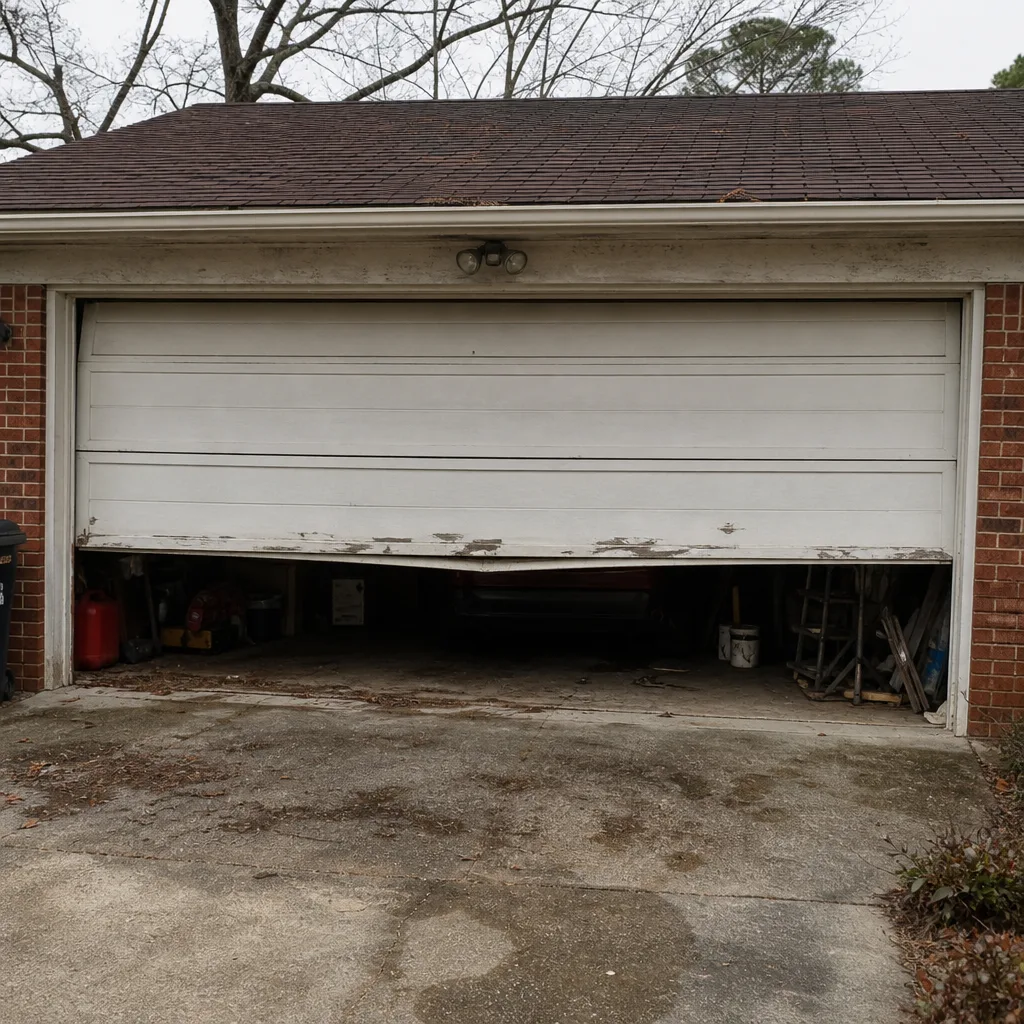 Before
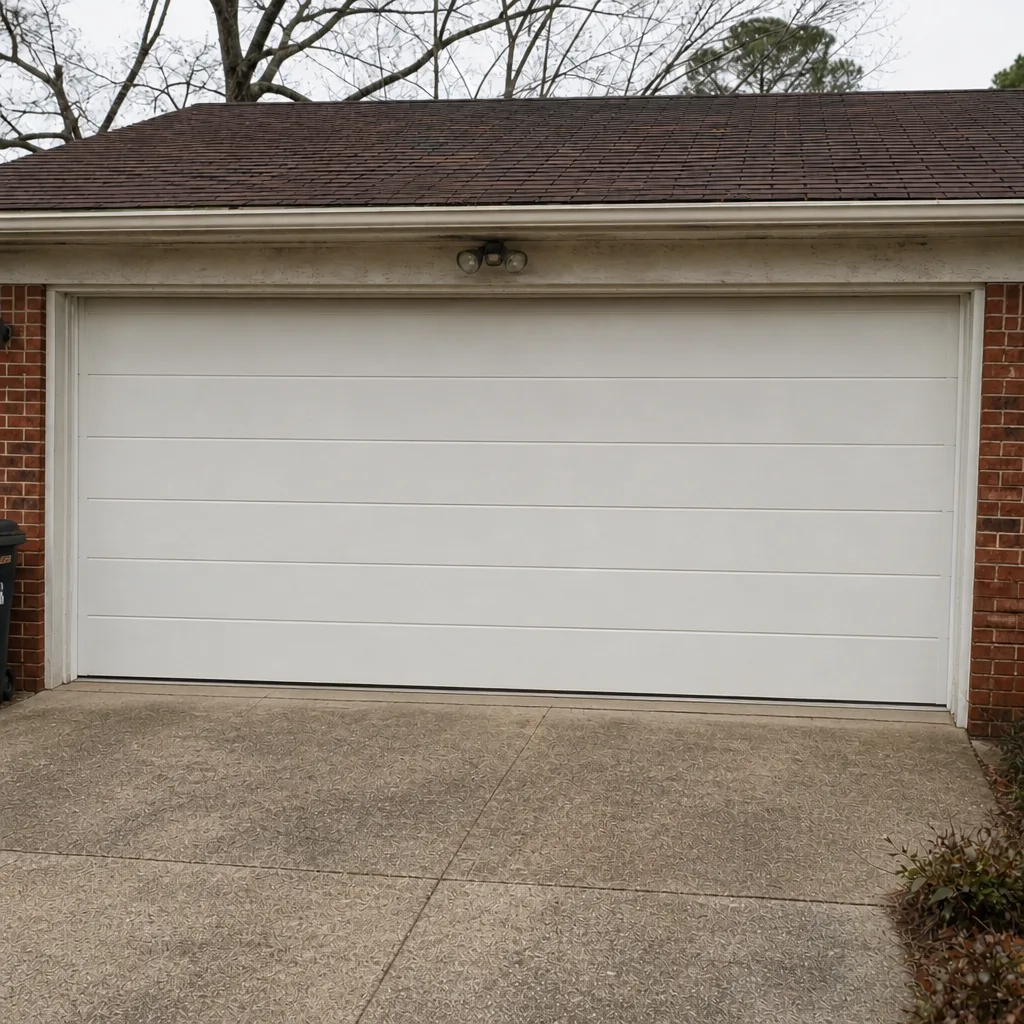 After
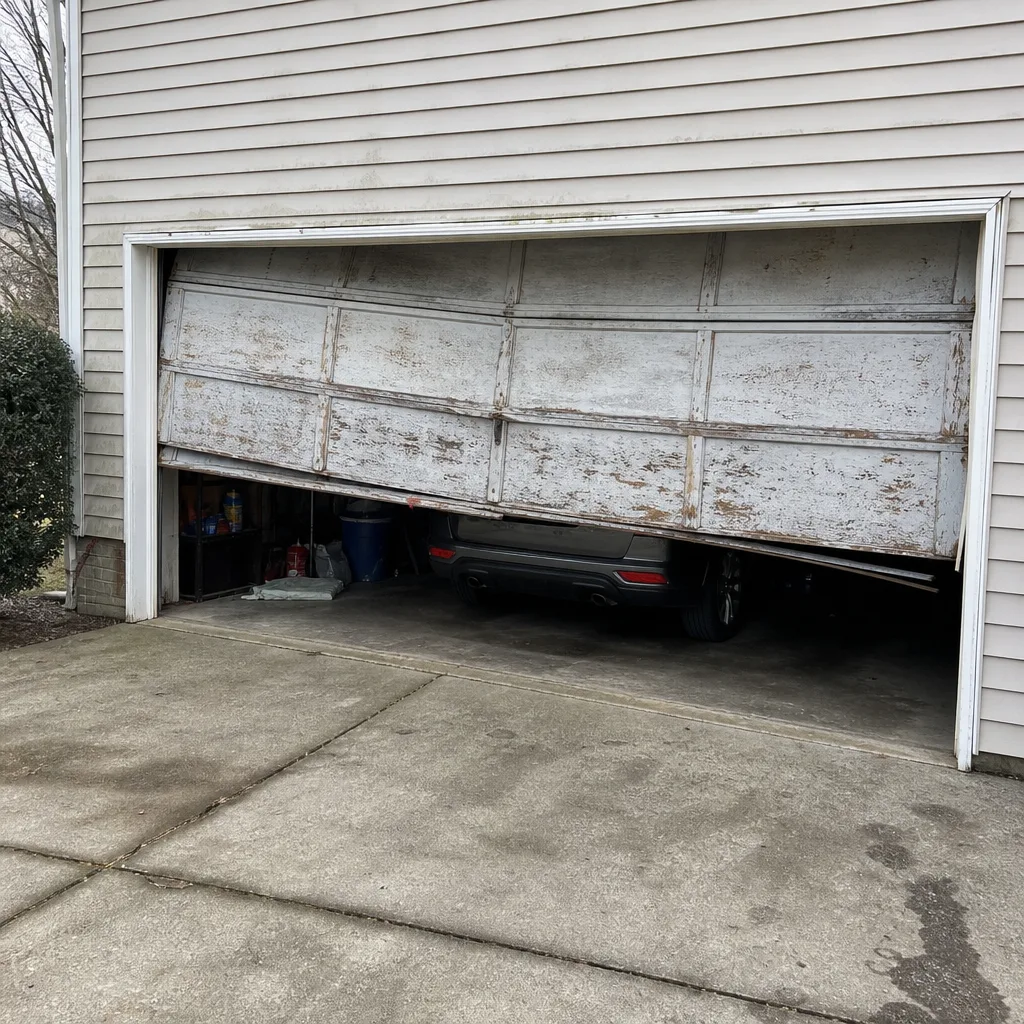 Before
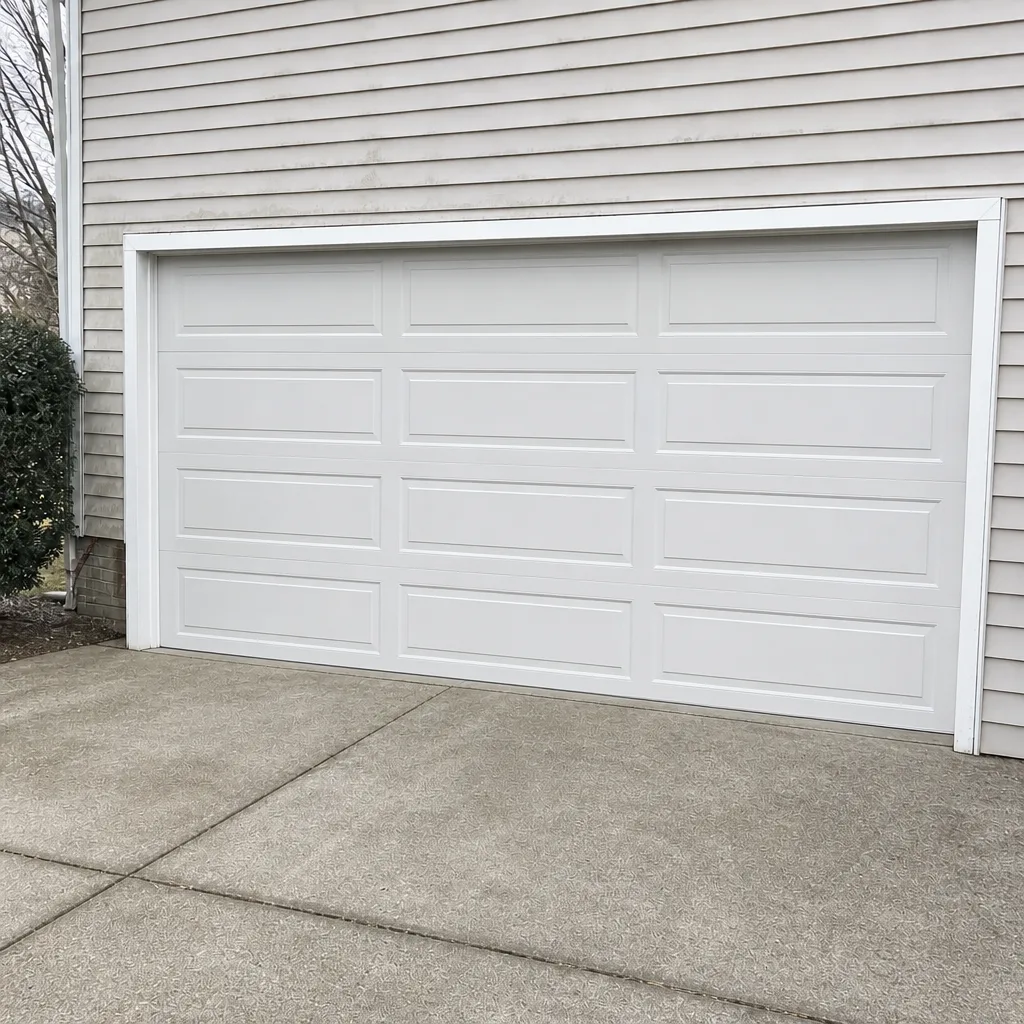 After
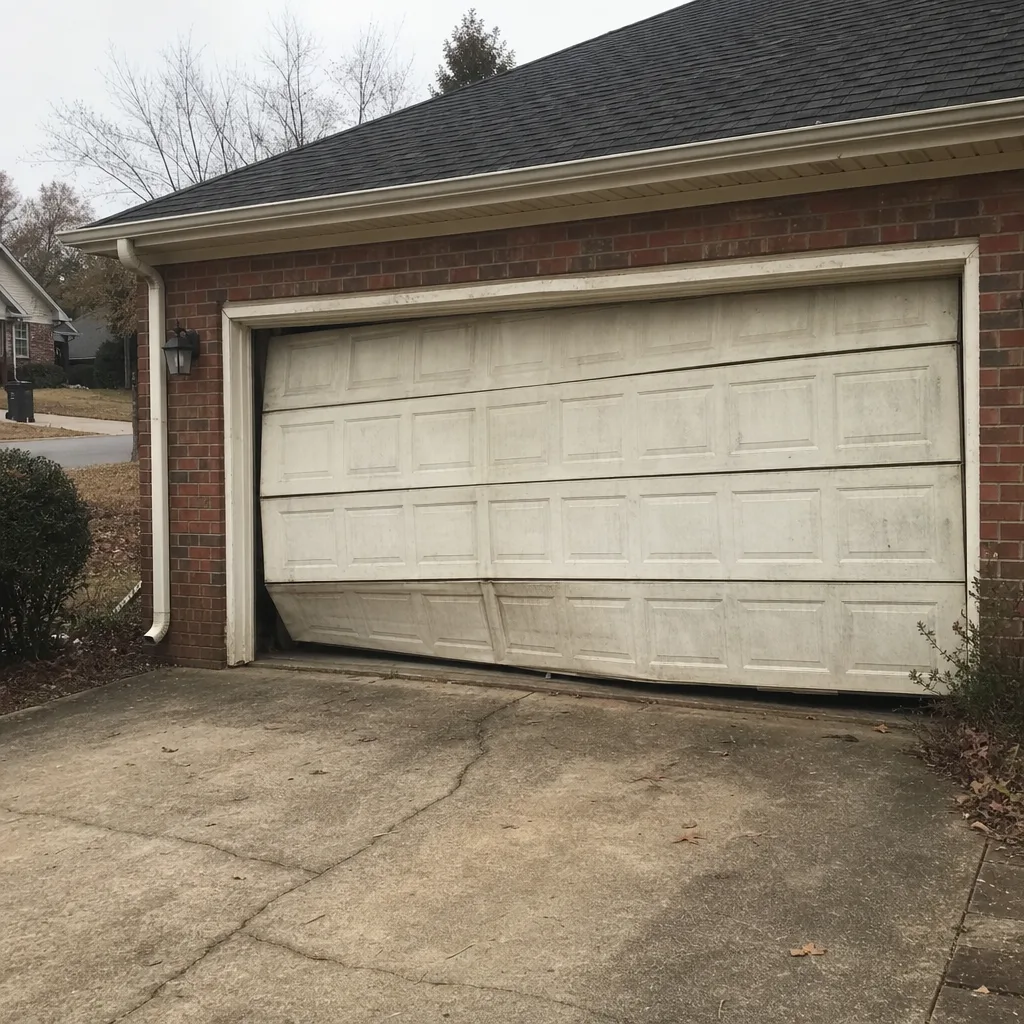 Before
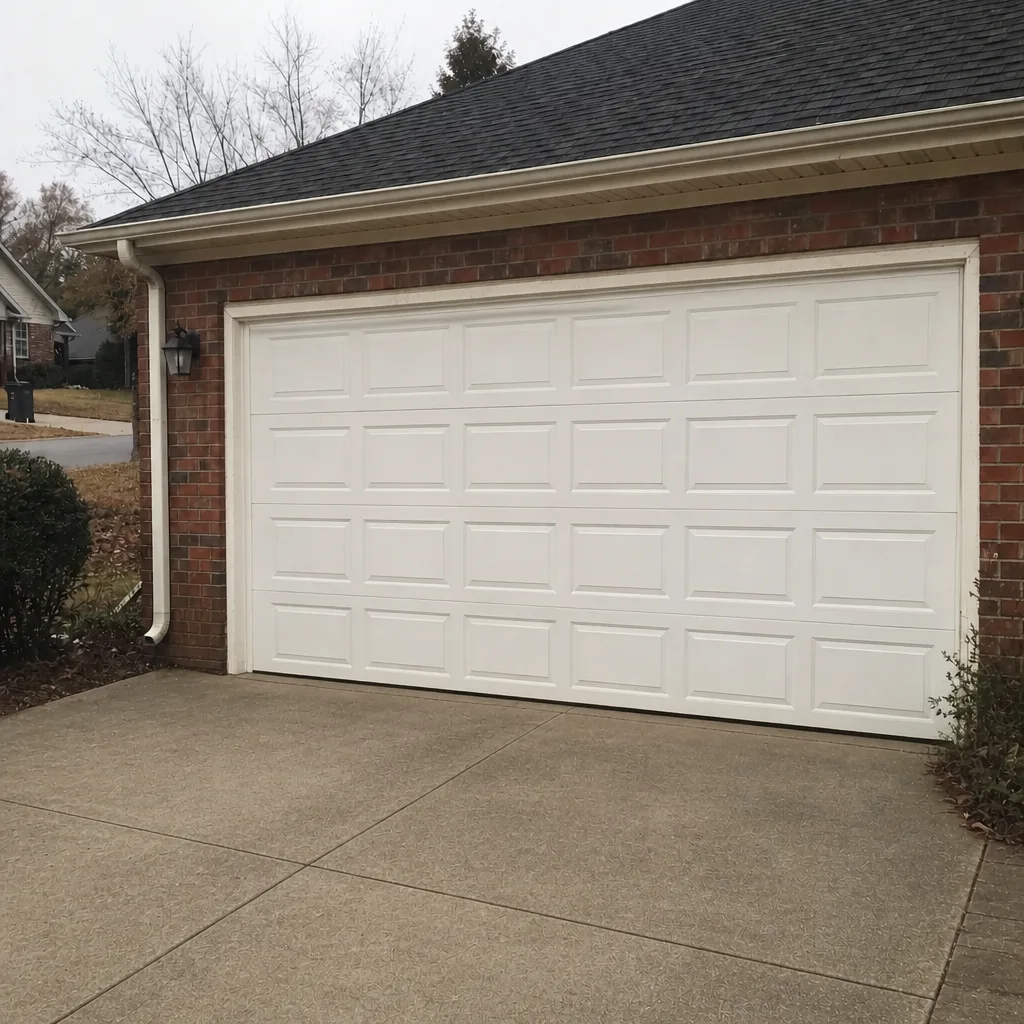 After
When to Call a Professional
Some jobs are yours, and some are not. Call a professional for anything involving a spring that’s broken, sagging, or near its cycle limit, a cable that’s frayed or off its drum, a door that’s come off its track, a track that’s bent, or an opener that fails the safety-reverse test. Also call if the door won’t balance when you lift it by hand, or if you hear a pop or a bang and the door suddenly gets heavy. Those are not lubrication issues, and waiting can make them worse. Arrow Garage Door Service offers free estimates in High Point – call (833) 842-1974. We answer 24/7. Fast dispatch from 7am to 7pm, Sunday through Friday.
Frequently Asked Questions
Once a year for a professional inspection, with lubrication every six months and a ten-minute visual check once a month in between. The annual inspection is where springs, cables, and track alignment get checked properly, because those are the parts homeowners should not adjust themselves.
No. WD-40 is a solvent and rust penetrant, not a lubricant, and it strips the grease out of steel roller bearings and leaves the metal dry. Use lithium grease on steel rollers, light silicone on nylon rollers, and keep lubricant off the tracks entirely.
Standard torsion springs are rated for about 10,000 cycles – roughly 5,000 open-and-close events. A busy household using the door 8 times a day can reach that in about three and a half years, while a quieter one may go much longer. Count your cycles to estimate where your spring stands, and never adjust a spring yourself.
Humidity affects bearings, wood panels, and metal hardware at the same time – panel seams swell, tracks pick up dust, and roller bearings start to announce themselves. A new squeak or grind in summer is usually a sign a bearing or hinge needs lubrication. A professional inspection catches anything that’s past lubrication.
Do a tension and hardware check before the first cold snap, and have a technician look at it if the door has been running for years without an inspection. Cold shrinks metal and can expose a spring that’s near the end of its life. A planned spring replacement is far easier than a broken spring with the car inside.
Yes. We work on doors and openers from LiftMaster, Chamberlain, Genie, Clopay, Amarr, Wayne Dalton, Craftsman, and Raynor. We service what you already own, so there’s no upsell toward one manufacturer. Call (833) 842-1974 for a free estimate – the price is quoted and agreed before any work starts.
The Bottom Line
A garage door maintenance schedule works when it’s built around failure modes, not the calendar. Lubricate every six months with the right product on the right part, and never WD-40 on rollers or grease on tracks. Run the five-point inspection once a month in under ten minutes, and you’ll catch most developing problems while they’re still cheap. Understand your spring’s cycle math, prepare for High Point’s humidity and cold snaps each season, and let a technician handle springs, cables, and anything under tension. If a door in High Point is overdue for a professional inspection, or if something on the check turned up, we’re ready to look. Call (833) 842-1974. We answer 24/7. Fast dispatch from 7am to 7pm, Sunday through Friday. For the full range of what we handle, start with Arrow Garage Door Service.
Written by the team at Arrow Garage Door Service.